The Art of Peking Opera: A Timeless Treasure of Chinese Culture
Peking Opera, known as Jingju in Chinese, stands as one of the most iconic and revered traditional performing arts in China. With a history spanning over 200 years, it blends music, vocal performance, mime, dance, and acrobatics into a vibrant theatrical experience. Recognized as a Masterpiece of the Oral and Intangible Heritage of Humanity by UNESCO in 2010, Peking Opera is not merely a form of entertainment but a profound reflection of Chinese aesthetics, history, and philosophy.
The Origins and Evolution of Peking Opera
Peking Opera emerged in the late 18th century during the Qing Dynasty, evolving from earlier forms of Chinese opera such as Kunqu and Yuju. It was initially popular among the imperial court and later spread to the public. The art form was heavily influenced by the diverse regional operas of Anhui and Hubei provinces, earning it the nickname Erhuang after the two primary musical styles it incorporated. Over time, Peking Opera absorbed elements from other folk arts, refining its unique blend of performance techniques.
By the 19th and early 20th centuries, Peking Opera reached its golden age, with legendary performers such as Mei Lanfang elevating it to new heights. Mei’s innovations in female role portrayal (dan) and his international performances introduced the art form to global audiences, cementing its status as a cultural ambassador for China.
Key Elements of Peking Opera
Peking Opera is characterized by its highly stylized and symbolic performance style. Several core components contribute to its distinct identity:
-
Music and Vocal Performance
The music of Peking Opera is based on a system of melodies and percussion. Two primary styles dominate: Xipi and Erhuang, each conveying different emotions. Performances feature solos, duets, and ensemble singing, often accompanied by traditional instruments like the jinghu (a two-stringed fiddle), yueqin (a moon-shaped lute), and drums. -
Role Types (Sheng, Dan, Jing, Chou)
Peking Opera categorizes performers into four main role types, each with distinct characteristics:- Sheng: Male roles, including scholars, warriors, and young men.
- Dan: Female roles, portrayed by male actors in traditional performances.
- Jing: Painted-face roles, symbolizing bravery, cunning, or supernatural traits.
- Chou: Comic roles, providing humor through exaggerated expressions and movements.
-
Movement and Makeup
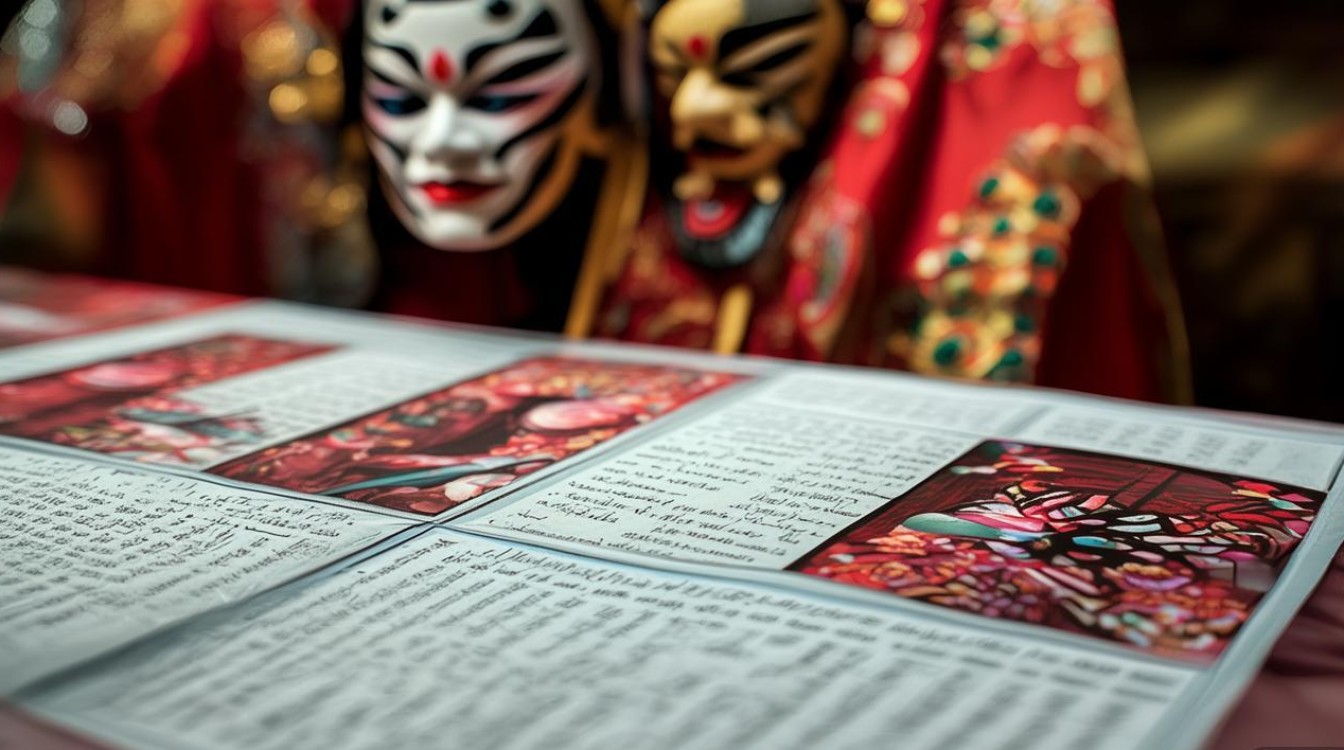
Performances emphasize highly codified movements, such as shoushu (hand gestures) and taitiao (acrobatic leaps). The iconic facial makeup, with its bold colors and patterns, symbolizes character traits—red for loyalty, black for integrity, and white for treachery. -
Costumes and Props
Elaborate costumes, adorned with intricate embroidery, reflect the character’s social status. Props are minimal but symbolic; for example, a whip may represent a horse, and a paddle signifies a boat.
The Cultural Significance of Peking Opera
Peking Opera serves as a vessel for transmitting Chinese cultural values and historical narratives. Many of its stories are drawn from folklore, classical literature, and historical events, such as The Drunken Concubine, which depicts the tragic life of Yang Guifei, or Farewell My Concubine, which explores loyalty and sacrifice. Beyond entertainment, the art form embodies Confucian ideals of morality, filial piety, and harmony.
In modern times, Peking Opera has faced challenges, including competition from contemporary media and a decline in younger audiences. However, efforts to preserve and revitalize the art form have gained momentum. Schools dedicated to training performers, digital archives of classic performances, and fusion experiments with modern art forms are ensuring its relevance for future generations.
Peking Opera’s Global Influence
Peking Opera has transcended cultural boundaries, inspiring artists worldwide. Its influence can be seen in Western theater, opera, and even cinema. For instance, the film Farewell My Concubine (1993) brought international attention to the art form, while contemporary choreographers have incorporated Peking Opera movements into modern dance. Cross-cultural collaborations, such as joint performances with the Metropolitan Opera in New York, highlight its universal appeal.
A Comparative Look: Peking Opera vs. Western Opera
To better understand Peking Opera’s uniqueness, a comparison with Western opera is illuminating:
| Aspect | Peking Opera | Western Opera |
|---|---|---|
| Origins | China, late 18th century | Italy, late 16th century |
| Vocal Style | Falsetto, stylized singing | Bel canto, naturalistic vocalism |
| Movement | Highly symbolic, acrobatic | Minimal, focused on acting |
| Makeup | Colorful, symbolic facial designs | Natural or subtle |
| Themes | Historical, moral, folkloric | Mythological, romantic, tragic |
FAQs About Peking Opera
-
What makes Peking Opera different from other forms of Chinese opera?
Peking Opera is distinguished by its synthesis of diverse regional styles, emphasis on acrobatics and symbolic movements, and its highly codified role system. Unlike other Chinese operas, it places greater focus on visual storytelling through makeup, costumes, and gestures. -
How is Peking Opera being preserved today?
Preservation efforts include government-supported cultural programs, traditional opera schools, digital initiatives to archive performances, and public outreach events to engage younger audiences. Additionally, contemporary adaptations and collaborations with modern art forms are helping to keep the tradition alive.
In conclusion, Peking Opera is a living testament to China’s rich cultural heritage. Its intricate blend of music, drama, and visual art continues to captivate audiences, bridging the gap between tradition and modernity. As it evolves, this timeless art form remains a source of national pride and a global symbol of China’s artistic excellence.