雅思口语中的对比类话题解析与应对策略
在雅思口语考试中,"compare"(对比)类话题是高频考点,尤其在Part 1和Part 2中频繁出现,这类题目要求考生对两个或多个事物、观点、经历等进行客观比较,并阐述个人偏好或原因,掌握对比类话题的答题逻辑、词汇表达和结构布局,能有效提升口语表达的流畅度和深度,本文将从题型分类、核心技巧、实例分析及常见误区四个方面,系统解析雅思口语中的对比类话题。
对比类话题的常见类型
雅思口语中的对比类话题主要分为以下三类,考生需根据不同题型调整答题策略:
-
物品对比(Part 1/Part 2)
- 例:"Compare reading books and watching movies."
- 核心要求:从功能、体验、成本等维度展开对比。
-
经历对比(Part 2)
- 例:"Describe a journey you took and compare it with another trip."
- 核心要求:突出两次经历的差异,如目的、感受、收获等。
-
观点对比(Part 3)
 (图片来源网络,侵删)
- 例:"Some people prefer living in cities, others prefer countryside. Which do you think is better?"
- 核心要求:平衡分析利弊,并给出个人立场。
对比类话题的核心答题技巧
-
逻辑框架:四步法
- Step 1:引入主题(1-2句话)
例:"When it comes to learning new skills, I'd like to compare online courses and traditional classroom teaching."
- Step 2:分点对比(3-4个核心差异点)
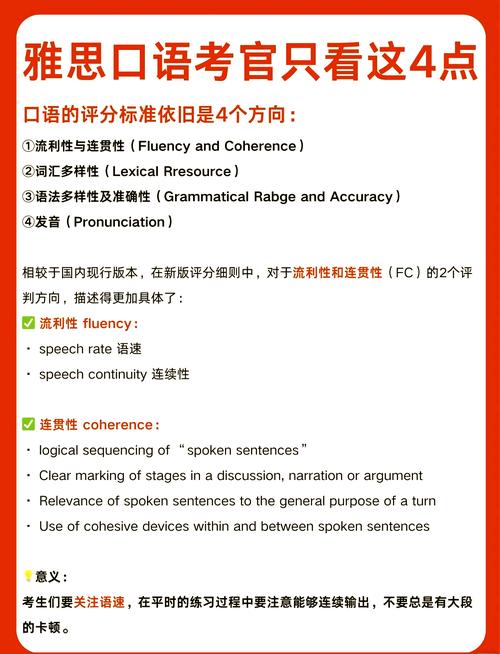
- 使用对比连接词:while, whereas, on the other hand, in contrast。
- Step 3:阐述个人偏好(1-2句话)
例:"Personally, I lean towards online courses because of their flexibility."
- Step 4:总结升华(1句话)
例:"Ultimately, the choice depends on individual learning styles."
 (图片来源网络,侵删)
- Step 1:引入主题(1-2句话)
-
词汇与句型升级
- 高级对比词汇:
| 基础词汇 | 替换表达 |
|----------|----------|
| different | divergent, disparate |
| similar | analogous, comparable |
| advantage | merit, superiority |
| disadvantage | drawback, limitation | - 复杂句型:
- "While traditional education fosters face-to-face interaction, online platforms offer unparalleled convenience."
- "The former emphasizes discipline, whereas the latter prioritizes self-motivation."
- 高级对比词汇:
-
数据与例证支撑
- 在Part 3中,可加入具体数据或社会现象增强说服力:
"According to a 2025 survey, 65% of professionals prefer remote work for its time-saving benefits, whereas only 30% value in-person collaboration."
- 在Part 3中,可加入具体数据或社会现象增强说服力:
实例分析:对比类话题示范 Compare traveling alone and traveling with friends.**
参考回答:
Traveling alone and with friends present distinct experiences, each catering to different preferences.
Firstly, independence versus companionship defines the core difference. Solo travel allows complete freedom to set schedules and make spontaneous decisions, whereas group trips require consensus, which can sometimes lead to compromises. For instance, during my solo trip to Japan, I spent hours exploring a hidden bookstore without pressure, but a group vacation to Thailand involved lengthy discussions about dining options.
Secondly, cost efficiency varies significantly. Solo travelers often bear full expenses for accommodation and transport, making it pricier per person. In contrast, groups can split costs, reducing individual burdens. However, solo travel may uncover budget-friendly options like hostels, which are less feasible for large groups.
Lastly, personal growth differs. Solo journeys challenge individuals to problem-solve independently, fostering self-reliance. Conversely, group trips enhance social skills and shared memories. Personally, I value solo travel for introspection but cherish group trips for the laughter and camaraderie.
In conclusion, the choice hinges on whether one seeks solitude or connection.
常见误区与规避方法
-
避免绝对化表述
- 错误:"Books are always better than movies."
- 正确:"Books often offer deeper insights, while movies excel in visual storytelling."
-
防止结构混乱
- 使用信号词引导逻辑:Firstly, Secondly, In contrast, On the flip side。
-
避免词汇重复
- 同一对比点中替换表达:"costly" → "expensive" → "pricey" → "financially burdensome"。
FAQs
Q1: 如何在Part 3中平衡对比双方的观点?
A1: 采用"双方论证+个人立场"结构,先客观陈述A的优势(如:"Remote work reduces commuting time"),再转折B的优点(如:"However, office environments boost team creativity"),最后以个人偏好收尾(如:"I believe hybrid models offer the best of both worlds")。
Q2: 对比类话题需要给出最终结论吗?
A2: 建议在Part 2和Part 3中给出简短结论,但避免重复观点。"While both options have merits, the ideal choice depends on one's priorities." 结论需体现思辨性,而非简单重复前文。
通过系统训练对比类话题的逻辑框架、词汇多样性和例证能力,考生可显著提升口语表达的层次感和说服力,备考时建议针对不同题型进行专项练习,并录音复盘,优化表达细节。