雅思口语考试中,"leading"(引导)是考生展现语言组织能力和交流技巧的核心能力之一,无论是Part 1的日常问答、Part 2的个人陈述,还是Part 3的深度讨论,有效的引导都能让表达更流畅、逻辑更清晰,同时也能展现考生的思维主动性和语言掌控力,本文将从"leading"的定义、重要性、具体技巧及实战应用四个维度,系统解析如何在雅思口语中通过引导提升表现。
理解"Leading"的核心内涵
在雅思口语中,"leading"并非简单的"说话",而是指考生通过语言策略主动掌控对话节奏、拓展话题深度、并自然衔接观点的能力,它包含三个关键要素:话题方向掌控(避免被考官问题"牵着走")、逻辑衔接自然(用过渡词串联观点)、内容深度拓展(从简单回答延伸至细节分析),当考官问"Do you like reading?"时,仅回答"Yes, I do"是被动应答,而补充"I'm into science fiction because it allows me to imagine future worlds, which connects to my interest in space technology"则体现了主动引导——既回答问题,又带出个人偏好和深层原因。
"Leading"能力的重要性
-
提升语言流畅度
引导能力强的考生能减少卡顿,通过提前设计的话题衔接词(如"Actually, this reminds me of..."或"Speaking of which...")让表达如行云流水,根据雅思官方评分标准,"流畅度与连贯性"占25%的权重,而引导技巧是达成这一指标的核心。 -
展现思维逻辑性
雅思口语不仅考察语言,更考察思维,通过引导展示"观点-解释-举例"的结构(如"I prefer working in teams. First, it boosts efficiency. For instance, when I did a group project last month..."),能让考官清晰捕捉到考生的逻辑链条,从而在"词汇资源"和"语法广度与准确性"上获得更高评价。 -
弥补词汇或语法短板
即使遇到不熟悉的词汇,考生也可通过引导技巧绕过难点,例如被问"Describe a traditional festival in your country",若不记得"lantern"一词,可改为"We hang colorful lights outside our houses during that festival, which symbolize good fortune"——用描述性语言替代生词,同时展现主动引导话题的能力。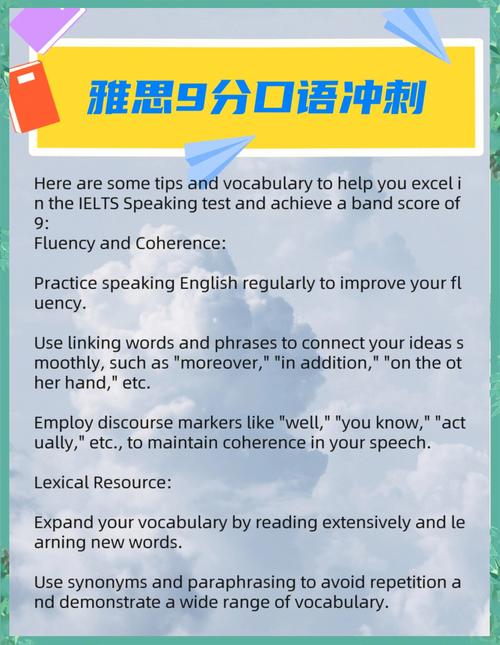 (图片来源网络,侵删)
实用的"Leading"技巧与工具
(一)话题拓展的"黄金三问"
面对开放性问题,考生可通过自我提问拓展内容:
- What?(描述核心内容)
例:"I chose to study engineering because... What fascinates me most is how it applies math to solve real problems."
- Why?(解释深层原因)
例:"Why I prefer online shopping? It saves time, especially since I live far from downtown malls."
- How?(说明具体方式)
例:"How do I stay healthy? By exercising three times a week and cooking meals at home instead of eating out."
 (图片来源网络,侵删)
(二)逻辑衔接词的分类应用
| 衔接类型 | 常用表达 | 应用场景 |
|---|---|---|
| 递进关系 | Moreover, In addition, What's more | 补充细节、深化观点 |
| 转折对比 | However, On the other hand, Despite | 引入不同视角或转折 |
| 因果解释 | Therefore, As a result, This is why | 说明结果或原因 |
| 举例说明 | For example, Such as, Take...as an instance | 用具体案例支撑观点 |
| 总结归纳 | In conclusion, To sum up, Overall | 结束段落或总结核心观点 |
(三)Part 2的"故事引导法"
在个人陈述(Part 2)中,可按"背景-冲突-解决-感悟"的结构引导话题:
- 背景:"The time I got lost in a foreign city was during my trip to Tokyo last year..."
- 冲突:"However, my phone died suddenly, so I couldn't use the map..."
- 解决:"Luckily, I asked a local shop owner who drew me a simple direction map..."
- 感悟:"This experience taught me that kindness from strangers can turn a scary situation into a memorable one."
实战场景中的"Leading"应用
(一)Part 1:快速建立引导节奏
考官问题:"Do you live in a house or an apartment?"
普通回答:"I live in an apartment."
引导式回答:"I live in an apartment, which is actually quite convenient because it's close to my university. Actually, this makes it easier for me to join study groups with classmates—speaking of which, we often meet in the study room on weekends."
(技巧:补充细节+自然过渡+关联新话题)
(二)Part 3:深度讨论的引导策略
考官问题:"Do you think technology has improved communication?"
普通回答:"Yes, it has. People can talk easily now."
引导式回答:"Definitely. Technology has revolutionized communication by breaking geographical barriers. For instance, video calls allow me to see my family abroad in real time. However, this also raises an important question: has it made face-to-face conversations less meaningful? I think it depends on how we use these tools..."
(技巧:明确立场+举例论证+反向提问+辩证分析)
(三)Part 2:避免卡顿的"预引导"
在准备时间(1分钟)内,可快速搭建引导框架:
- 核心主题:描述一次难忘的旅行(题目)
- 引导分支:
Where & When → Why it was special → What happened → How it changed me
- 备用衔接:
- "If I had to choose one trip, it would be..."(开头)
- "What made this trip stand out was..."(展开)
- "Looking back, I realize..."(
FAQs
Q1: 如何在口语考试中避免因紧张而忘记引导技巧?
A: 考前可通过"影子跟读法"(shadowing)练习,即跟读英文播客或演讲,模仿说话者的逻辑衔接词和语调变化,在模拟考试中刻意使用"Firstly, Secondly, Finally"等固定结构,形成肌肉记忆,考试时若紧张,可深呼吸后用简单引导句(如"Let me explain...")争取思考时间,逐步进入状态。
Q2: 引导话题时如果偏离考官问题怎么办?
A: 雅思口语允许适度拓展,但需确保核心问题得到回答,若发现偏离,可用"Coming back to your question..."自然拉回主题,若被问"Describe a book you like",却过多讨论电影改编,可补充:"Although the movie was great, the book's detailed descriptions of characters were what truly captivated me—this is why I recommend reading the original." 既承认偏离,又重新聚焦核心问题。