雅思小作文衔接是写作过程中的关键环节,良好的衔接能够使文章逻辑清晰、层次分明,帮助读者快速理解信息之间的关系,本文将从衔接的重要性、常用衔接手段、不同段落的衔接技巧以及常见问题等方面,详细解析如何提升雅思小作文的衔接质量。
衔接在雅思小作文中的重要性
雅思小作文要求考生在20分钟内完成150词以上的写作任务,内容需涵盖数据描述、趋势分析或信息概括,在这一过程中,衔接词、过渡句和逻辑关系的合理运用,能够确保文章从数据呈现到结论推导的流畅性,若衔接不当,容易出现信息断层、逻辑混乱等问题,直接影响得分,在动态图表中,若缺乏时间顺序的衔接词,读者可能难以理解数据变化的先后关系;在静态图表中,若无分类对比的过渡句,各数据间的关联性会变得模糊。
常用衔接手段的分类与应用
逻辑关系衔接词
逻辑关系衔接词是连接句子和段落的核心工具,可分为以下几类:
- 转折关系:however, nevertheless, nonetheless,用于对比不同数据或观点。“The number of males increased significantly, however, the figure for females remained stable.”
- 因果关系:therefore, thus, consequently,用于解释数据变化的原因或结果。“The rise in urban population therefore led to higher demand for housing.”
- 递进关系:furthermore, moreover, in addition,用于补充同类信息。“Online shopping grew by 20%. Moreover, this trend is expected to continue.”
- 顺序关系:firstly, secondly, finally,用于按步骤或类别展开描述。“Firstly, the percentage of young learners rose; secondly, the cost of education decreased.”
指代与重复衔接
通过代词或关键词重复避免信息重复,增强连贯性:
- 代词指代:it, they, this, these等。“The proportion of students using computers increased. This trend was most noticeable in urban areas.”
- 关键词重复:使用同义词或近义词替换核心词汇。“The number of cars surged. The surge was attributed to rising incomes.”
段落间的过渡技巧
雅思小作文通常包含引言、主体段和结论段,段落间的过渡需自然:
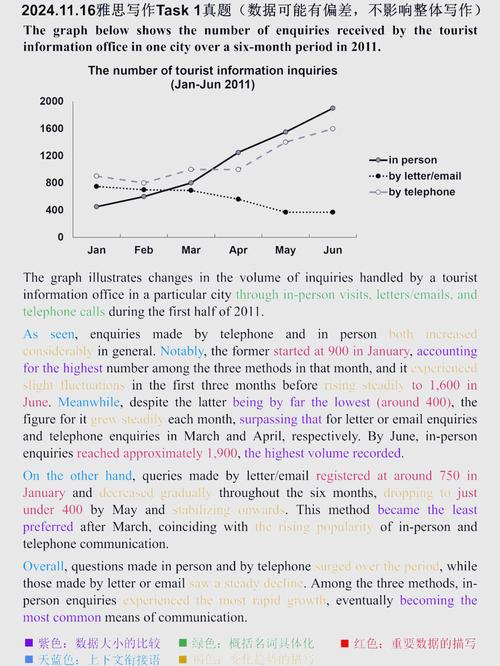
- 引言与主体段:用“Overall, the data reveals...”或“As can be seen from the chart...”引出核心趋势。
- 主体段之间:通过“Turning to the second aspect...”或“Regarding the differences...”切换主题。
- 结论段:用“In conclusion, it is clear that...”总结全文,并避免引入新信息。
不同题型下的衔接策略
动态图表(线图、柱状图等)
动态图表需突出时间变化和趋势对比,衔接词应侧重时间顺序和转折:
- 时间顺序:between 2000 and 2010, over the period, by the end of等。
- 趋势描述:rose steadily, fluctuated slightly, peaked at等。
- 示例:“From 2000 to 2010, the sales figure gradually increased. By contrast, the cost experienced a sharp decline.”
静态图表(饼图、表格、柱状图等)
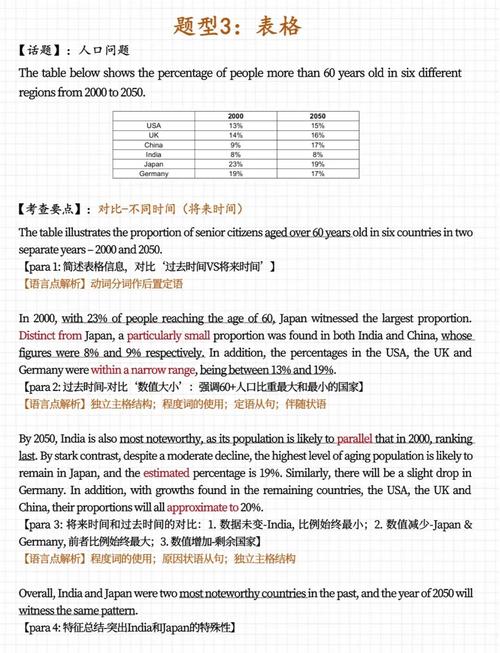
静态图表需强调数据分类和对比,衔接词应侧重分类和比较:
- 分类描述:In terms of..., As for..., Regarding...等。
- 对比关系:while, whereas, compared with等。
- 示例:“While 60% of males preferred online shopping, only 40% of females chose this method.”
流程图与地图
流程图和地图需按步骤或空间顺序展开,衔接词需体现逻辑顺序:
- 步骤衔接:First, Next, Subsequently, Finally等。
- 空间衔接:To the north of..., Adjacent to..., Opposite to...等。
- 示例:“First, raw materials are collected. Next, they are transported to the factory. Finally, the products are packaged.”
常见衔接错误与优化建议
过度使用衔接词
过多使用“however”, “therefore”等会使文章显得生硬,建议:
- 替换为短语(如“in spite of”代替“however”)。
- 通过句子结构变化实现衔接(如使用分词短语)。
逻辑关系错误
将因果关系误用为转折关系,建议:
- 明确句子间的逻辑,选择恰当的衔接词。
- 使用“due to”表示原因,而非“but”。
缺乏段落过渡
主体段之间跳跃性大,读者难以跟随,建议:
- 增加主题句,明确每段核心内容。
- 使用“Similarly”, “In contrast”等词衔接不同段落。
衔接技巧实践表格
| 衔接类型 | 常用词汇/短语 | 应用场景 | 例句 |
|---|---|---|---|
| 转折关系 | however, yet, on the contrary | 对比不同数据 | The price of oil rose sharply; however, demand decreased. |
| 因果关系 | therefore, as a result, owing to | 解释数据变化原因 | Therefore, more people chose public transport. |
| 递进关系 | furthermore, in addition, what's more | 补充同类信息 | The number of users doubled. Moreover, new features were added. |
| 顺序关系 | first, then, finally, subsequently | 按步骤描述 | First, the mixture is heated; then, it is cooled. |
| 比较关系 | similarly, likewise, in comparison | 对比相似数据 | Similarly, the percentage of females increased. |
| 总结关系 | in conclusion, to sum up, overall | 总结全文 | In conclusion, the data shows a clear upward trend. |
相关问答FAQs
Q1: 雅思小作文中是否需要使用复杂的衔接词?
A1: 不必刻意追求复杂衔接词,准确性和自然性更重要,简单衔接词(如“and”, “but”)若使用恰当,同样能保证连贯性,建议优先确保逻辑清晰,再逐步丰富词汇。
Q2: 如何避免段落间的衔接生硬?
A2: 可通过以下方法优化:1) 每段首句使用主题句,明确段落核心;2) 段落末句提出过渡句,如“Unlike the previous trend, this section focuses on...”;3) 保持段落长度均衡,避免某段过长导致衔接断裂。