Animal英语口语:日常交流中的高频表达
在英语口语中,“animal”是一个基础且高频的词汇,但围绕它展开的表达远不止“动物”这一层含义,从描述动物特征、讨论宠物饲养,到谈论野生动物保护,甚至使用动物相关的习语,这些表达都能让我们的英语交流更生动、自然,本文将系统梳理与“animal”相关的口语表达,帮助你在不同场景下灵活运用。
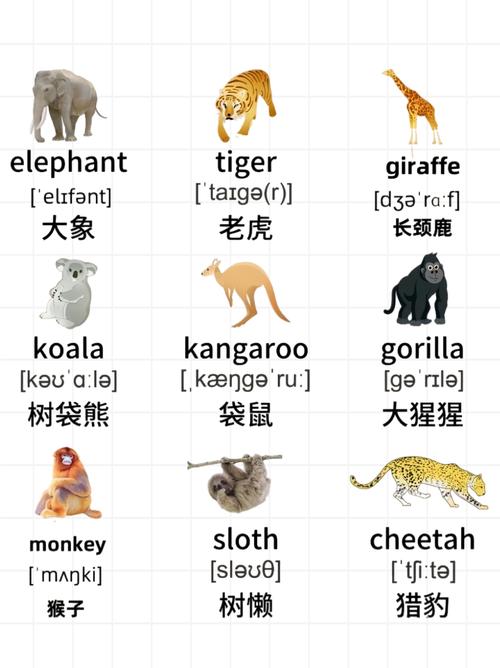
(图片来源网络,侵删)
基础词汇与分类
掌握“animal”的基础分类是口语交流的第一步,英语中可根据栖息地、特征等将动物分为不同类别:
| 分类依据 | 常见词汇 | 例句 |
|---|---|---|
| 栖息地 | wild animal (野生动物), domestic animal (家畜) | Lions are wild animals that live in Africa. (狮子是生活在非洲的野生动物。) |
| 体型大小 | large animal (大型动物), small animal (小型动物) | Rabbits are small animals that many people keep as pets. (兔子是许多人饲养的小型宠物。) |
| 食性 | herbivore (食草动物), carnivore (食肉动物), omnivore (杂食动物) | Bears are omnivores because they eat both plants and meat. (熊是杂食动物,因为它们既吃植物也吃肉。) |
日常口语中还会用“pet”指代宠物,如“dog, cat, goldfish”;用“farm animal”指农场动物,如“cow, sheep, chicken”。
描述动物特征的常用表达
在谈论动物时,如何生动描述它们的特征是关键,以下是高频口语表达:
-
外形描述
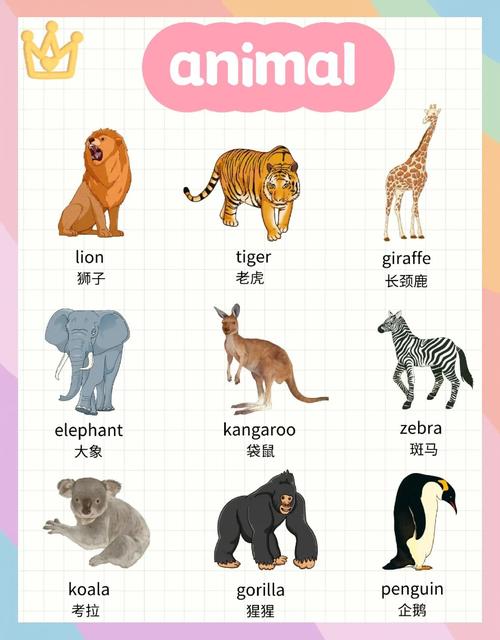 (图片来源网络,侵删)
- 毛色:a black cat (黑猫), a white rabbit with long ears (长耳朵的白兔)
- 体型:a giant elephant (巨型大象), a tiny hamster (小巧的仓鼠)
- 动作:The monkey is climbing the tree. (猴子正在爬树。) The bird is singing beautifully. (鸟儿在动听地歌唱。)
-
性格与行为
- 性格:A loyal dog (忠诚的狗), a playful kitten (爱玩的猫咪)
- 行为:The dolphin is very intelligent. (海豚非常聪明。) Bees work together to collect nectar. (蜜蜂一起采蜜。)
-
声音拟声词
英语中常用拟声词描述动物声音,- Dog: bark (吠)
- Cat: meow (喵)
- Cow: moo (哞)
- Sheep: baa (咩)
动物相关的生活场景口语
-
讨论宠物饲养
- 询问对方是否养宠物:“Do you have any pets at home?” (你家里有宠物吗?)
- 描述养宠物的日常:“I walk my dog every morning.” (我每天早上遛狗。) “My cat loves sleeping on the sofa.” (我的猫喜欢睡在沙发上。)
-
动物园或农场游览
 (图片来源网络,侵删)
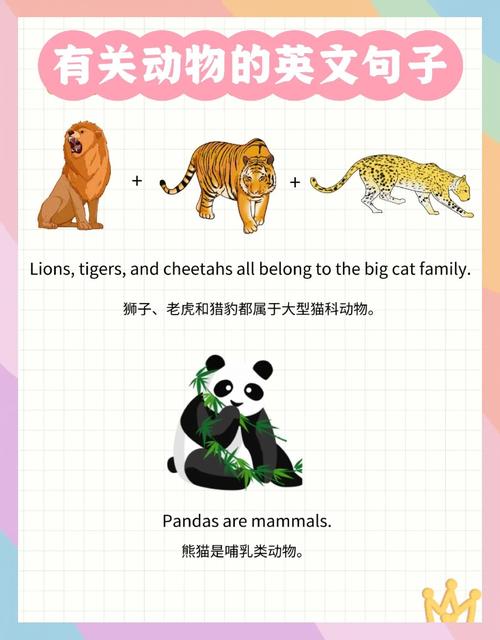
- 表达兴奋:“I can’t wait to see the pandas at the zoo!” (我迫不及待想看动物园的熊猫!)
- 提问互动:“What do pandas eat mostly?” (熊猫主要吃什么?)
-
野生动物保护话题
- 表达担忧:“Many wild animals are losing their habitats.” (许多野生动物正在失去栖息地。)
- 呼吁行动:“We should protect endangered animals like tigers.” (我们应该保护老虎等濒危动物。)
动物习语与俚语
英语中大量使用动物相关的习语,掌握这些表达能让口语更地道:
-
常见习语
- “Let the cat out of the bag” (泄露秘密)
例:Don’t tell anyone about the surprise party—you’ll let the cat out of the bag! - “Hold your horses” (别着急,等一下)
例:Hold your horses! We need to check the map first. - “As busy as a bee” (非常忙碌)
例:My mom is as busy as a bee preparing for the festival.
- “Let the cat out of the bag” (泄露秘密)
-
俚语表达
- “Snake in the grass” (阴险的人)
例:I thought he was my friend, but he turned out to be a snake in the grass. - “Cold fish” (冷漠的人)
例:My neighbor is a cold fish—never talks to anyone.
- “Snake in the grass” (阴险的人)
文化差异与趣味表达
不同文化中动物象征意义不同,口语交流中需注意:
- 西方文化:狗象征忠诚(“Man’s best friend”),猫象征独立;
- 中国文化:龙象征吉祥,但在西方文化中龙常被描述为邪恶生物。
英语中“kill two birds with one stone”(一石二鸟)与中文“一箭双雕”异曲同工,体现了语言的共通性。
学习建议与实践方法
- 积累词汇:通过动物纪录片(如《Planet Earth》)学习相关表达;
- 情景对话:与语伴模拟“宠物医院”“动物园导游”等场景;
- 阅读与模仿:阅读英文童话(如《The Jungle Book》),注意动物角色的对话。
FAQs
Q1: 如何区分“animal”和“beast”在口语中的用法?
A: “Animal”是通用词,指所有动物;而“beast”多指“野兽”或“凶猛的动物”,口语中也可形容行为粗鲁的人(如“He behaved like a beast”),日常交流中,“animal”更常用。
Q2: 有没有简单的方法记忆动物相关的习语?
A: 可以通过“联想记忆法”:将习语与动物特征结合。“as sly as a fox”(像狐狸一样狡猾),联想到狐狸的机敏形象,更容易记住,多看美剧或英文漫画,在语境中巩固记忆。