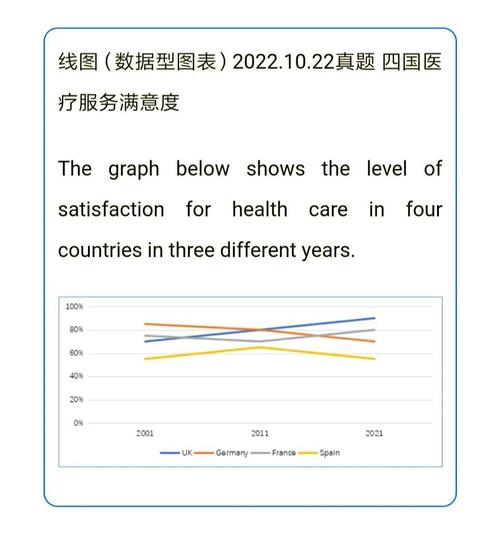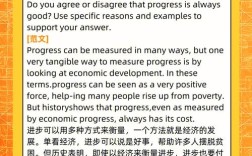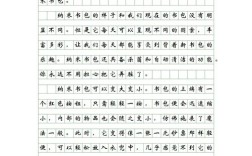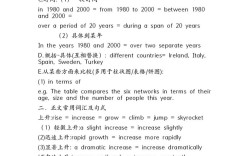
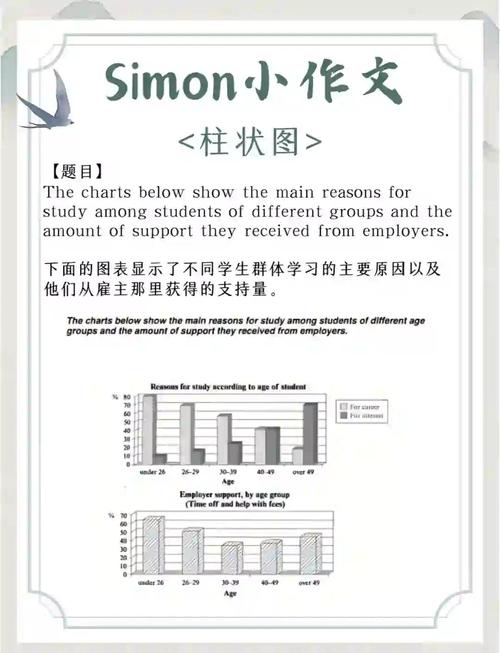
雅思综合图表题是写作Task 1中常见题型,要求考生对多图表(如柱状图+饼图、线图+表格等)进行综合分析,既要描述单个图表核心信息,又要揭示图表间的关联或差异,这类题目考察数据提取、对比归纳及逻辑组织能力,需遵循“总-分-总”结构,确保信息全面、条理清晰。
综合图表题的核心特点
综合图表通常包含2-3个关联图表,共同呈现某一主题的不同维度数据,柱状图展示某地2010-2025年可再生能源产量变化,饼图同期展示各类能源占比结构;或线图对比两国GDP增速,表格补充具体产业数据,其核心特点是“分中有合”,需先独立分析各图表,再挖掘内在逻辑(如变化趋势与占比的关联、数据差异背后的原因等)。
解题步骤与写作技巧
审题:明确图表关联与核心信息
- 定位主题:先通读图表标题、坐标轴标签、单位等,确定整体主题(如“全球塑料垃圾处理方式”“某市交通流量变化”)。
- 识别图表类型:区分线图(趋势)、柱状图(对比/排名)、饼图(占比)、表格(具体数据)等,明确各图表侧重。
- 关联分析:思考图表间的逻辑关系,柱状图展示“垃圾总量增长”,饼图展示“回收率下降”,二者关联为“总量增长导致回收压力增大”。
结构布局:“总-分-总”框架
- 开头段(概述):用1-2句话概括图表核心主题及整体趋势/差异,无需细节数据。
例:The charts illustrate the changes in the proportion of renewable energy consumption in Country A from 2010 to 2025 and its distribution by source in 2025. - 主体段(分述):分段描述各图表,每段聚焦1个图表,遵循“总述细节+关键数据支撑”原则。
- 单图表描述:先概括主要特征(如“太阳能产量增长最快”),再引用具体数据(最高值、最低值、变化率等)。
- 关联分析:若图表存在逻辑关联,需单独成段或融入主体段,结合线图的“增长趋势”与饼图的“占比变化”,说明“风能占比提升主要因其产量年增速达15%”。
- 结尾段(:重申核心结论,补充未提及的次要信息或趋势预测,避免重复数据。
数据选取与表达
- 关键数据优先:选取最具代表性的数据(峰值、谷值、转折点、占比Top 3等),避免堆砌所有数据。
- 数据对比:通过“while”“whereas”“in contrast”等连词突出差异,如“Coal accounted for 60% in 2010, whereas this figure dropped to 30% in 2025.”
- 动态描述:线图/柱状图用“increase by 20%”“reach a peak of 50”等静态表达,或“rise steadily”“fluctuate slightly”等动态表达。
范文示例(以“某国能源消耗”主题)
The two charts provide a clear overview of energy consumption patterns in Country X from 2010 to 2025, with a focus on renewable and non-renewable sources, as well as the percentage of energy used by different sectors.
Between 2010 and 2025, the total energy consumption in Country X increased from 100 to 150 units, a 50% rise over the decade. Notably, renewable energy consumption grew significantly, from 20 units to 60 units, while non-renewable energy sources showed a slower increase, rising from 80 units to 90 units. This shift indicates a positive trend toward sustainable energy development.
The pie chart breaks down energy usage by sector in 2025. The residential sector was the largest consumer, accounting for 40% of total energy, followed by the industrial sector at 35%, and the transportation sector at 25%. In contrast, the renewable energy consumption chart reveals that solar energy contributed the most to renewable sources, making up 45% of the total, followed by wind energy (30%) and hydroelectric power (25%).
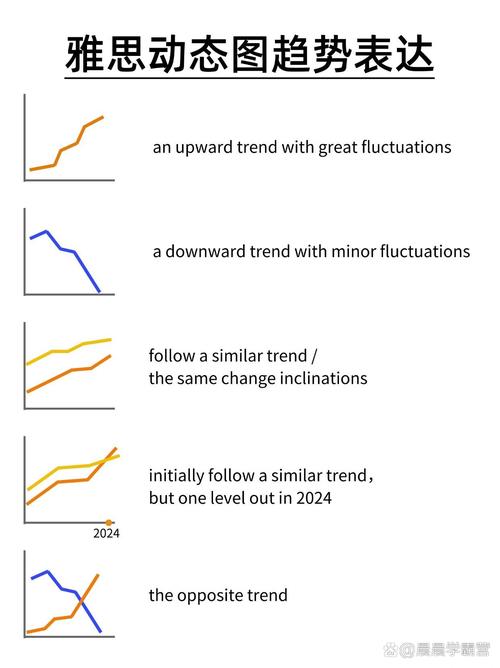
A closer comparison between the two charts highlights a key correlation: while the residential sector led in overall energy consumption, the industrial sector showed the highest growth in renewable energy adoption, increasing its usage from 5 units to 25 units over the decade. This suggests that industrial policies may have played a crucial role in promoting renewable energy.
常见问题与注意事项
| 问题类型 | 解决方案 |
|---|---|
| 图表过多,信息过载 | 优先描述核心趋势、极值及图表关联,次要数据可概括(如“other sources accounted for 10%”)。 |
| 忽略图表关联 | 在主体段末尾或单独段落分析逻辑,如“A图表的增长导致B图表占比变化”。 |
| 数据描述不准确 | 区分“increase to”(达到)和“increase by”(增加),注意单位(million/percentage)。 |
FAQs
Q1: 综合图表题是否需要比较所有图表的数据?
A1: 不必强行比较所有数据,需根据图表关联性选择性对比,若两图表分别展示“总量”和“占比”,可分析“总量增长对占比结构的影响”;若关联性弱,则独立描述各图表核心信息即可。
Q2: 如何避免数据描述重复?
A2: 可通过“数据归类+概括”减少重复,柱状图展示多国数据时,可分组描述(“European countries saw a slight increase, while Asian countries experienced a sharp rise”)而非逐一罗列,同时用“similarly”“in addition”等词衔接同类数据。