
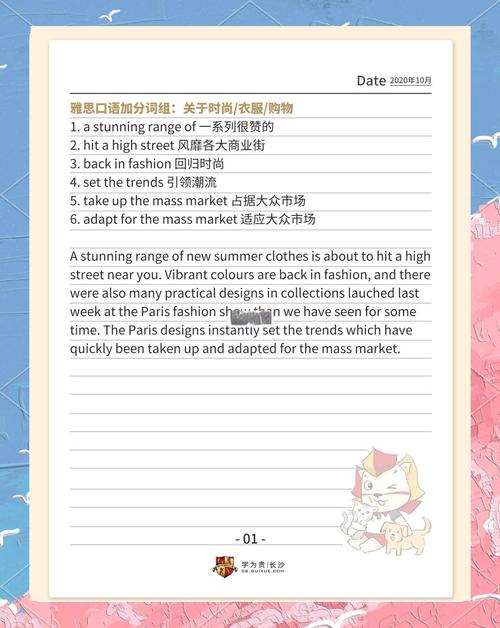
在雅思口语考试中,谈论“穿着时尚的人”是一个常见且贴近生活的话题,这类题目不仅考察考生的词汇量、语法运用能力,更注重考生对文化现象、个人观点的逻辑表达,以下将从多个维度解析如何深入探讨这一话题,并提供实用表达和范例。
定义“穿着时尚的人”:超越表面的审美
“穿着时尚的人”并非简单指追逐潮流的“时尚达人”,而是指通过对服装、配饰的巧妙搭配,展现个人审美、生活态度和文化素养的群体,他们可能不盲目追随爆款,却能通过经典单品与潮流元素的结合,形成独特的风格,有人偏爱极简主义,以基础款搭配细节配饰;有人热衷混搭,将不同风格、材质的服装碰撞出新意,在雅思口语中,明确这一定义能为后续论述奠定基础,展现思维的深度。
穿着时尚者的共同特征:细节中的品味
穿着时尚的人往往具备以下特质,这些特征可作为口语回答的论点支撑:
| 特征维度 | 具体表现 | 雅思实用词汇 |
|---|---|---|
| 色彩搭配 | 善用邻近色、对比色,或通过中性色(黑白灰)平衡整体色调 | Monochromatic(单色的)、Complementary(互补色的)、Pastel(柔和的)、Vibrant(鲜艳的) |
| 材质混搭 | 结合棉麻的天然质感与皮革的硬朗,或蕾丝的柔美与丹宁的休闲 | Textured(有质感的)、Breathable(透气的)、Structured(有剪裁的)、Flowy(飘逸的) |
| 配饰点睛 | 用丝巾、帽子、首饰等小元素提升整体造型,避免过度堆砌 | Statement piece(吸睛单品)、Minimalist(极简风)、Vintage(复古的)、Chunky(粗犷的) |
| 场合适配 | 根据职场、休闲、正式等不同场合调整风格,兼顾实用性与美观度 | Versatile(多功能的)、Dress code(着装规范)、Smart casual(商务休闲)、Formal(正式的) |
文化与社会视角:时尚背后的语言
时尚是文化的缩影,穿着风格往往反映社会价值观和个人身份认同,在西方文化中,街头时尚(street fashion)强调个性解放,而日式风格(如“Wabi-Sabi”美学)则注重质朴与不完美;新中式服装的流行既是对传统文化的传承,也是对现代审美的创新,在雅思口语中,提及文化差异能体现考生的国际视野。
“In my city, young people are increasingly blending traditional elements like cheongsam with modern streetwear, which shows a growing confidence in our cultural identity.”
(在我的城市,年轻人越来越喜欢将旗袍等传统元素与现代街头风结合,这体现了我们对文化认同感的增强。)
雅思口语实战:Part 1-3 高频问题解析
Part 1: Introduction & Interview
Q: Do you like to follow fashion trends?
A: Not exactly. I prefer developing my own style rather than blindly following trends. For example, while oversized sweaters are popular now, I like pairing them with tailored trousers to create a balanced look. I think fashion should be about self-expression, not conformity.
(不完全是,我更倾向于形成自己的风格,而非盲目追随潮流,虽然现在oversized毛衣很流行,但我喜欢用它搭配剪裁利落的裤子,打造平衡的造型,我认为时尚应是自我表达,而非盲从。)
Q: What do you think of people who dress fashionably?
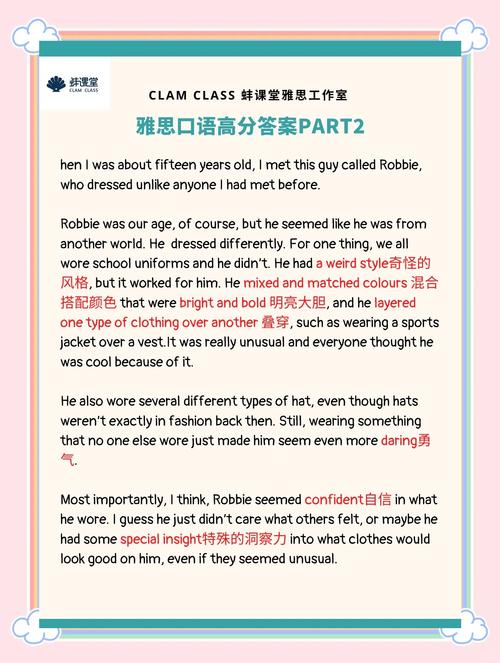
A: I admire their creativity and confidence. Dressing fashionably isn’t just about wearing expensive clothes; it’s about how they mix and match items to reflect their personality. For instance, my friend always adds a vintage brooch to her plain blazers, which makes her stand out.
(我欣赏他们的创造力和自信,穿得时尚不只是穿昂贵的衣服,而是他们如何通过混搭展现个性,我朋友总在基础款西装上别一枚复古胸针,这让她很出众。)
Part 2: Long Turn (Cue Card)
Describe a person you know who dresses fashionably.
You should say:
- Who this person is
- How often you see them
- What their style is like
- And explain why you think they dress fashionably.
Sample Answer:
The person I’d like to talk about is my cousin, Lily. She’s a graphic designer in her late 20s, and I see her once a month when we catch up for lunch.
Lily’s style is best described as “eclectic minimalism”—she combines simple, neutral-toned pieces with bold, unique accessories. For example, she might wear a beige oversized coat, black straight-leg jeans, and then add a pair of crimson loafers and a silver geometric necklace. Her outfits always look effortless, but every detail seems carefully thought out.
I think she dresses fashionably because she uses clothing as a form of self-expression. As a designer, she’s sensitive to colors, textures, and silhouettes, and she translates that into her daily outfits. Moreover, she doesn’t chase fast fashion; instead, she invests in timeless items like a tailored blazer or a leather handbag, which she styles in different ways. To her, fashion is about telling a story, not just following trends.
Part 3: Discussion
Q: Is it important for people to dress well in your opinion?
A: It depends on the context. In professional settings, dressing well can boost confidence and leave a good impression—like wearing a suit to a job interview shows respect. In daily life, however, comfort and practicality matter more. I think the key is to strike a balance: look presentable without feeling constrained by fashion rules.
(这取决于场合,在职场中,穿得好能增强自信并留下好印象——比如穿西装面试表示尊重,但在日常生活中,舒适和实用性更重要,关键在于平衡:在时尚规则中保持得体,又不感到束缚。)
Q: How has fashion changed in your country over the past few decades?
A: Great changes! In the past, people mainly focused on practicality—clothes were durable and simple. Now, with globalization and social media, there’s more diversity. Young people are embracing subcultures like K-fashion, streetwear, and even sustainable fashion. Also, secondhand clothing platforms have become popular, reflecting a shift towards conscious consumption.
(变化很大!过去人们主要注重实用性——衣服耐穿且简单,随着全球化和社交媒体,风格更加多元,年轻人开始拥抱K-pop时尚、街头风,甚至可持续时尚,二手平台兴起,反映了消费意识的转变。)
FAQs
Q1: 雅思口语中描述时尚风格时,如何避免词汇重复?
A1: 可通过“同义替换+细节描述”丰富表达,描述“穿得好看”,除“fashionable”外,还可说“well-dressed”“stylish”“has a great sense of style”;描述“衣服”,可用“garment”“outfit”“attire”“piece”等,加入细节:如“a flowy midi dress”(飘逸的 midi 连衣裙)、“cropped leather jacket”(短款皮夹克),既能展示词汇量,又能让描述更生动。
Q2: 如何在口语中自然融入文化元素,避免生硬?
A2: 结合个人经历或观察,用具体例子引出文化对比。“When I studied abroad, I noticed my European classmates often wore scarves even in spring, which is not common in China. It reflects their emphasis on layering and elegance.”(我在国外留学时,注意到欧洲同学春天常戴围巾,这在中国不常见,体现了他们对叠穿和优雅的重视。)通过“观察+差异分析+文化内涵”的逻辑,使内容更自然且有深度。