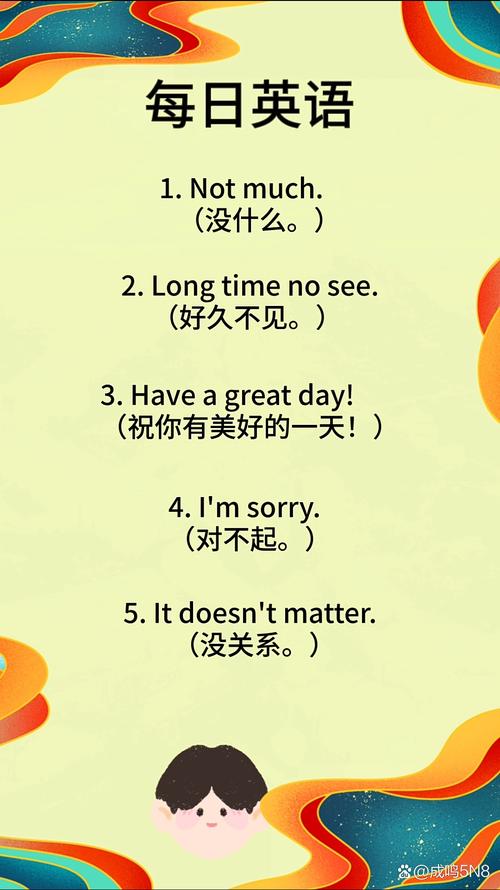
在英语日常交流中,“没关系”是一个高频使用的表达,用于回应道歉、表达宽容或化解尴尬,根据不同语境、对象和语气,“没关系”的英语表达方式多种多样,准确使用这些表达能让沟通更自然、地道,本文将系统梳理“没关系”在不同场景下的口语表达,帮助读者掌握其灵活用法。
基础通用型:适用于日常道歉回应
当他人因小事道歉时(如迟到、轻微碰撞、忘记小承诺等),以下表达简洁友好,适合大多数非正式场合。
-
No problem
最常用的表达之一,语气轻松,带有“这不算事儿”的随意感。
例:A: Sorry I’m late! B: No problem, I just got here too. -
It’s okay / That’s okay
温和且中性,比“No problem”稍正式一点,但仍适用于日常交流。
例:A: Sorry for spilling your coffee. B: It’s okay, don’t worry about it. -
Don’t worry about it
强调“不必放在心上”,带有安慰意味,适合对方因愧疚反复道歉时。
例:A: I really messed up the report. B: Don’t worry about it, we can fix it together. (图片来源网络,侵删)
强调原谅与宽容:适用于需要传递善意时
当希望明确表达“我原谅你了”,或对方因失误感到不安时,以下表达更能传递宽容。
-
No worries
澳大利亚、新西兰等地常用,英式英语中也逐渐流行,比“No problem”更口语化,适合朋友间。
例:A: Sorry I forgot to call you back. B: No worries, I figured you were busy. -
It’s all right / That’s all right
比“It’s okay”更强调“事情已经过去,没有矛盾了”,适合需要缓和气氛的场合。
例:A: I’m sorry I argued with you earlier. B: It’s all right, let’s not fight anymore. -
Forgive me / Please forgive me
虽然是“原谅我”,但回应时可用“I forgive you”或“Of course, I forgive you”,适合亲密关系或对方需要明确得到原谅时。
例:A: Forgive me for being so harsh. B: I forgive you, you were just stressed. (图片来源网络,侵删)
轻松化解尴尬:适用于非正式或幽默场合
当道歉事件本身无伤大雅,甚至有点滑稽时,可用幽默或随意的表达化解尴尬。
-
Don’t even mention it
“根本不用提”,暗示“这件事根本不值一提”,语气轻松。
例:A: Sorry I tripped over your shoes! B: Don’t even mention it, I should’ve put them away. -
Forget it
口语中常用,根据语气可表达“算了,没关系”,但需注意:若语气生硬,可能带有不耐烦的情绪(如“行了,别提了”)。
例:A: I’m sorry I burned the cookies. B: Forget it, we can order pizza. -
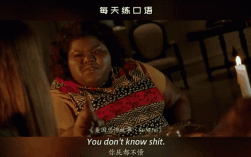
Stuff happens / Shit happens
“事情总会发生”,前者温和,后者稍粗俗(适合朋友间),用于表达“意外难免,不必自责”。
例:A: Sorry the train was delayed. B: Stuff happens, we’ll get there eventually.
正式场合:适用于职场或对长辈/客户
在正式场合,需避免过于随意的表达,选择礼貌、得体的用语。
-
That’s quite all right
比“That’s all right”更正式,强调“完全没问题”,适合对客户、上司或长辈。
例:A: Sorry for the delay in the meeting. B: That’s quite all right, thank you for letting me know. -
Please don’t worry about it
在“Don’t worry about it”基础上加“please”,更显礼貌,适合职场中对同事或合作伙伴。
例:A: I apologize for the error in the document. B: Please don’t worry about it, we’ve made corrections. -
Not at all
简洁正式,常回应“Thank you”或“Sorry”,带有“完全不用客气/道歉”的意味。
例:A: Sorry to take up so much of your time. B: Not at all, I’m happy to help.
不同语境下的“没关系”表达对比
以下表格总结常见场景下的适用表达,方便快速查阅:
| 场景 | 推荐表达 | 语气/适用对象 |
|---|---|---|
| 日常小事道歉(朋友间) | No problem, No worries | 随意、轻松 |
| 需要安慰对方时 | Don’t worry about it | 温和、包容 |
| 正式场合(职场/长辈) | That’s quite all right, Not at all | 礼貌、得体 |
| 幽默化解尴尬 | Don’t even mention it, Stuff happens | 轻松、幽默(非正式) |
| 强调原谅 | It’s all right, I forgive you | 真诚、亲密 |
使用时的注意事项
- 语气比词汇更重要:Forgive me”若用冷漠语气说出,反而显得不真诚;“No problem”若配合微笑,则传递友好。
- 避免歧义:“Forget it”需根据语气判断,生硬时可能被理解为“懒得计较”。
- 文化差异:在正式场合,避免使用“Shit happens”等粗俗表达;对陌生人优先选择“It’s okay”或“That’s all right”。
相关问答FAQs
Q1: 当别人为严重错误道歉时,用“No problem”合适吗?
A: 不合适。“No problem”多用于小事,若对方因重大失误(如弄丢重要文件)道歉,用“No problem”可能显得轻视,此时建议用“I understand it was an accident”或“We can work through this”,表达理解而非“无所谓”。
Q2: “It doesn’t matter”和“没关系”一样吗?
A: 不完全一样。“It doesn’t matter”字面是“不重要”,若用于回应道歉,可能让对方觉得“你认为这件事不重要,不重视我的感受”;而“没关系”(如“It’s okay”)更侧重“我原谅你”,朋友弄坏你心爱的物品,用“It doesn’t matter”可能伤人,用“It’s okay, accidents happen”更妥当。