一篇出色的中考英语作文,如同一次精彩的亮相与得体的告别,开头与结尾往往决定着阅卷老师的第一印象与最终评分,掌握这两部分的写作要领,能迅速提升作文的整体档次,为你的英语成绩增添关键优势。
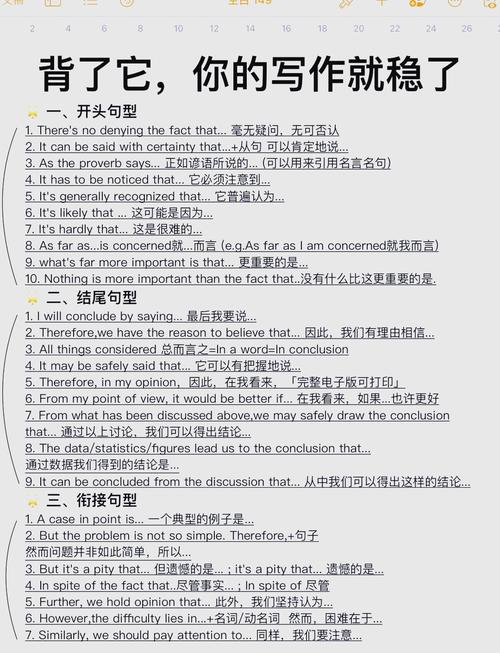
开篇:点亮文章的第一盏灯
好的开头应直入主题、清晰明确,同时力求新颖,避免陈词滥调,以下提供几种经实践证明有效的高分开篇方式,你可以根据题目灵活选用。
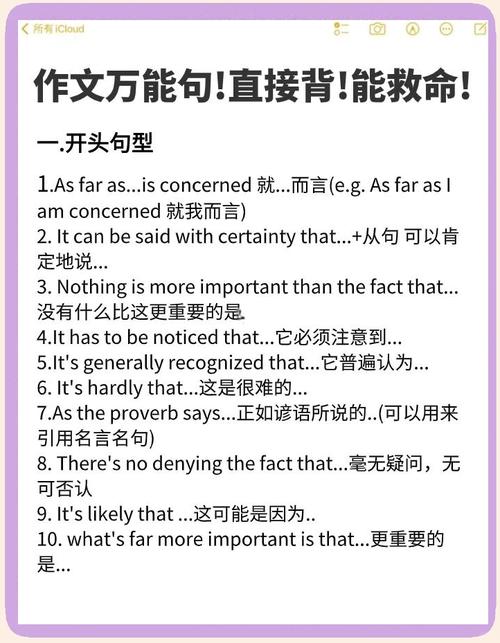
开门见山式 这是最稳妥、最清晰的方式,开篇即点明主题或观点,让阅卷老师立刻抓住文章核心。
- 适用场景:议论文、说明文、建议信等。
- 常用句型:
- “When it comes to …(谈及……)”
- “Nowadays, it is widely believed that …(人们普遍认为……)”
- “I am writing to share my views on …(我写此文是为了分享我对……的看法)”
- 示例:题目为“The Importance of Reading”
“When it comes to personal growth, reading plays an irreplaceable role. It not only broadens our horizons but also enriches our minds.”
 (图片来源网络,侵删)
设问互动式 通过提出一个与主题相关的问题,引发读者思考,自然引出下文。
- 适用场景:议论文、现象论述类文章。
- 常用句型:
- “Have you ever thought about …?(你是否曾想过……?)”
- “What would our life be like if …?(…,我们的生活将会怎样?)”
- 示例:题目为“How to Protect Our Environment”
“Have you ever noticed the plastic bottles floating in the river? Environmental protection is not a far-away topic, but an urgent action that requires everyone’s participation.”
引用名言式 恰当地引用一句贴切的名言或谚语,能瞬间提升文章的深度与文采。
- 适用场景:议论文、演讲稿。
- 关键点:确保引用准确、贴切,并能自然衔接至你的观点。
- 示例:题目为“The Value of Time”
“As the famous saying goes, ‘Time and tide wait for no man.’ This reminds us that time is the most precious resource we possess, and making good use of it is essential for success.”
 (图片来源网络,侵删)
现象描述式 从一种普遍的社会现象或个人经历切入,使文章有现实感,接地气。
- 适用场景:论述社会现象、记叙文。
- 常用句型:
- “In recent years, … has become a hot topic.(近年来,……已成为一个热门话题。)”
- “With the development of society, …(随着社会的发展,……)”
- 示例:题目为“On Using Smartphones Properly”
“It is common to see people, young and old, glued to their smartphone screens everywhere. While it brings convenience, overuse has caused some problems.”
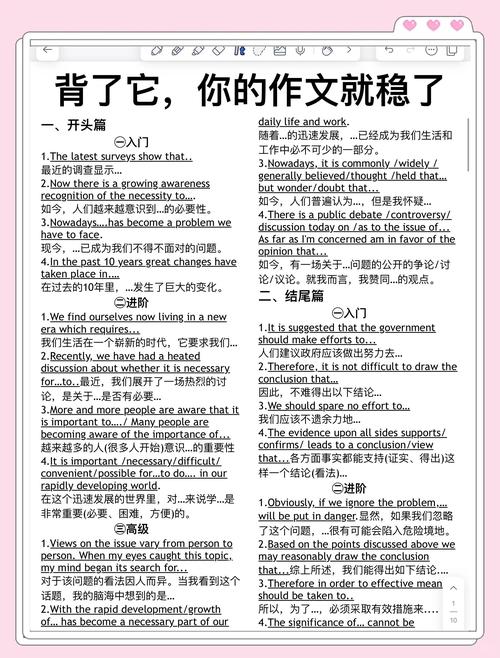
留下有力的回响
结尾是升华主题、强化印象的最后机会,切忌仓促结尾或简单重复开头,应做到总结全文、呼应开头,并适当展望或提出建议。
总结观点式 用简洁的语言重新概括文章的核心论点,这是最经典的结尾方式。
- 适用场景:几乎所有文体。
- 常用句型:
- “In conclusion, …(……)”
- “To sum up, …(……)”
- “All in all, it is clear that …(很明显……)”
- 示例:
“In conclusion, reading is like a key that opens the door to a wider world. Let us develop this beneficial habit from now on.”
提出倡议/展望式 在总结的基础上,发出呼吁或表达对未来的美好期望,使文章富有感染力。
- 适用场景:倡议书、议论文、演讲稿。
- 常用句型:
- “I believe if we … , our future will be more …(我相信如果我们……,我们的未来将会更……)”
- “Let’s join our hands to …(让我们携手共同……)”
- “It is high time that we took action to …(现在正是我们采取行动去……的时候了)”
- 示例:
“Therefore, I sincerely hope that every student can limit screen time and engage more in face-to-face communication and outdoor activities. A healthier and more balanced life is within our reach.”
呼应开头式 巧妙地回到开头提及的观点、问题或现象,形成首尾圆合的结构美,显示出缜密的构思。
- 适用场景:尤其适合采用设问、现象描述开头的文章。
- 示例:(开头为设问式)
开头:“Have you ever thought about what makes a true friend?” “So, the answer to the question ‘what makes a true friend’ is simple: understanding, support, and honesty. Such friendship is worth cherishing forever.”
引用升华式 再次引用名言,或用一句有力的原创句子点明主旨,令人回味。
- 示例:
“Just as a journey of a thousand miles begins with a single step, improving our English writing starts with crafting a strong beginning and a memorable ending.”
提升实战能力的几点建议
理解了方法,更需要通过练习将其内化,建议从以下方面着手:
建立自己的“语料库”,平时阅读范文时,有意识地将精彩的开头、结尾句型以及过渡词分类摘抄,表示总结的“In short”,表示建议的“It is advisable to”,表示强调的“Indeed”等。
坚持“一题多练”,针对同一个作文题目,尝试用两到三种不同的方式开头和结尾,比较其效果,这个过程能极大提升你的应变能力和语言驾驭力。
务必重视逻辑衔接,开头、正文、结尾之间需要自然的过渡句来连接,确保文章流畅连贯,而不是生硬地拼凑段落。
请牢记“简洁即美”的原则,中考作文篇幅有限,开头结尾应力求精炼,避免冗长拖沓,开头结尾各占2-3句为宜,迅速切入,利落收束。
清晰的开篇让思路一目了然,有力的结尾令观点深入人心,这些技巧并非刻板的模板,而是帮助你清晰、有条理、有文采地表达思想的工具,真正的提升源于持续的有意识练习——在动笔前花一分钟构思如何开头与结尾,在修改时反复推敲这两部分是否足够有力,当你将这些方法运用自如,你的作文便能在众多试卷中脱颖而出,展现出扎实的语言功底与严谨的思维品质,考场时间宝贵,一个训练有素的开头和结尾,就是你赢得时间与印象分的利器。