面试英语口语情景对话是求职过程中至关重要的一环,它不仅考察应聘者的语言表达能力,更检验其逻辑思维、应变能力及职业素养,掌握常见的面试场景对话技巧,能够帮助应聘者更自信、更专业地展示自己,从而增加获得心仪岗位的机会,以下将从面试前准备、开场白、核心能力问答、薪资谈判及结尾感谢五个环节,通过具体情景对话和实用技巧,解析面试英语口语的应对策略。
面试前准备:知己知彼,百战不殆
面试前的充分准备是成功的基础,应聘者需深入研究公司背景、岗位职责及行业动态,同时梳理自身经历,确保能将个人优势与岗位需求精准匹配。
准备要点:
- 公司调研:了解公司业务、核心价值观、近期动态及行业地位,“I’ve researched that your company is a leader in sustainable technology, especially in solar panel innovation. Could you share more about the team I’d be joining?”
- 岗位分析:明确岗位的核心要求(如技能、经验、软实力),准备相关案例,用STAR法则(情境-任务-行动-结果)组织语言。
- 问题预设:准备向面试官提问的问题,例如团队结构、项目挑战或职业发展路径,体现主动性和思考深度。
开场白:建立专业第一印象
面试开场通常持续1-2分钟,核心是礼貌问候、简洁自我介绍,并自然过渡到面试主题。
情景对话示例:
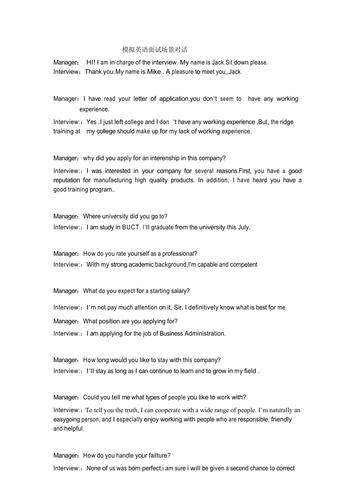
Interviewer: “Good morning. Please introduce yourself and tell us why you’re interested in this position.”
Candidate: “Good morning. Thank you for having me. My name is [Name], a graduate in Marketing from [University]. With three years of experience in digital marketing, I specialized in social media campaigns and data-driven strategies. For example, at my previous company, I increased Instagram engagement by 40% in six months by optimizing content timing and targeting. I’m particularly drawn to this role because your company’s focus on brand storytelling aligns with my passion for creating impactful content. I’m excited about the opportunity to contribute to your team.”
技巧提示:
- 控制自我介绍时长在1-2分钟,突出与岗位最相关的经历。
- 避免背诵简历,用具体数据或案例增强说服力。
- 保持微笑,眼神交流,展现自信与亲和力。
核心能力问答:展现匹配度与解决问题能力
面试官通过行为面试题(Behavioral Questions)和情景面试题(Situational Questions)考察应聘者的综合能力,以下是高频问题及应对策略:
行为面试题:描述过往经历
常见问题:
- “Tell me about a time you handled a difficult team project.”
- “Describe a situation where you failed and what you learned.”
应答结构(STAR法则):
| 环节 | 说明 | 示例 |
|----------|----------|----------|
| Situation(情境) | 简述背景,设定场景 | “In my previous role, our team was tasked with launching a product in two months, but a key supplier delayed delivery by three weeks.” |
| Task(任务) | 明确个人职责 | “My responsibility was to revise the timeline and communicate with stakeholders to avoid project failure.” |
| Action(行动) | 具体描述采取的措施 | “I prioritized tasks, negotiated with a backup supplier, and daily updates to the team to maintain transparency.” |
| Result(结果) | 量化成果,强调收获 | “We launched on time with a 15% higher pre-order rate. I learned to anticipate risks and build contingency plans.” |
情景面试题:模拟工作场景
常见问题:
- “How would you handle a tight deadline with limited resources?”
- “Describe how you’d resolve a conflict with a colleague.”
应答策略:
- 逻辑清晰,分点阐述(如“First, I would… Then, I’ll…”)。
- 体现团队协作、沟通能力及抗压能力。
示例:
“To resolve a conflict with a colleague, I’d first listen to their perspective to understand the root cause. Then, I’d propose a compromise based on our shared goals. For instance, if we disagree on a project approach, I’d suggest testing both ideas on a small scale and using data to decide the final direction. This ensures mutual respect and focuses on outcomes rather than personal opinions.”
薪资谈判:专业且务实
当面试官提及薪资期望时,需结合市场行情、个人能力及公司薪酬体系给出合理答复。
情景对话示例:
Interviewer: “What are your salary expectations?”
Candidate: “Based on my research of industry standards for this role in [City], with my experience in [key skill], I’m expecting a range of [X] to [Y]. However, I’m open to discussing this further, as I value the overall package—including opportunities for growth and benefits.”
技巧提示:
- 提前通过招聘网站、行业报告了解薪资区间。
- 避免直接给出具体数字,可反问:“What is the budget range for this position?”
- 强调自身价值,而非单纯关注薪资。
结尾感谢:留下积极印象
面试结束前,需表达感谢并确认后续步骤,展现职业素养。
情景对话示例:
Candidate: “Thank you for your time and detailed insights. This role sounds even more exciting than I initially thought. Could you please let me know when I might expect to hear back about the next steps? I’m looking forward to the possibility of joining your team.”
相关问答FAQs
Q1: 面试中遇到听不懂的问题怎么办?
A: 可礼貌请求重复或解释,“Sorry, could you please rephrase the question? I want to ensure I understand it correctly.” 避免不懂装懂,清晰表达意愿更能体现诚实与沟通能力。
Q2: 如何用英语自然地表达对公司的兴趣?
A: 结合具体细节,“I was impressed by your recent project [Project Name], especially how it addressed [specific issue]. This aligns with my interest in [related field], and I’m eager to contribute similar ideas.” 避免泛泛而谈,展现深度调研。