掌握英语作文写作,如同为思想搭建一座通往世界的桥梁,尤其在春节这样蕴含丰富文化的情境下,如何用英语清晰、地道地表达,是许多学习者关心的话题,本文将以“过年”为主题,探讨提升英语作文写作的实用方法,并提供范例与解析,助您笔下生辉。
精准破题:确立核心与视角
看到“过年”这类文化主题,首要任务是避免泛泛而谈,需从庞大主题中,选取一个具体、个人化的切入点。
- 传统视角:家庭团聚、年夜饭、守岁、红包的象征意义。
- 个人体验:一次难忘的返乡旅程、与家人准备食物的温馨、家乡独特的年俗。
- 今昔对比:庆祝方式随时代的变化,科技如何影响拜年形式。
- 文化深意:春节对于中国人身份认同的意义,团圆背后的哲学。
选定视角后,用一句清晰的主题句统领全文。“To me, the essence of Chinese New Year is not in the fireworks, but in the deliberate silence of making dumplings with my grandmother.”(春节的精髓不在于烟花,而在于和祖母一起包饺子时那种刻意的宁静。)这样的开头立刻建立起独特性和深度。
结构搭建:让逻辑流畅清晰
英语写作尤其重视结构的透明与逻辑的递进,推荐经典的三段式或五段式结构:
- :用生动细节、引语或问题引出主题,结尾亮明核心观点。
- 主体段落:每段一个分论点,采用“主题句 + 解释/例证 + 细节支撑 + 小结句”的模式,分论点“Reunion dinner symbolizes family bond”(团圆饭象征家庭纽带),可详细描述一道菜的准备工作、席间的对话与情感流动。
- :重申观点,但需升华,可展望未来、强调价值,或留下一个引人深思的结尾,避免简单重复开头。
语言锤炼:从正确到地道
词汇和语法的准确性是基石,但追求地道表达能让文章脱颖而出。
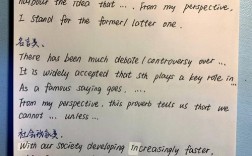
- 词汇选择:避免过度使用“good”、“happy”等宽泛词,描写春节,可使用“festive ambiance”(节日氛围)、“exuberant celebrations”(热闹的庆祝)、“time-honored traditions”(历史悠久的传统)、“savor the reunion”(品味团聚)等。
- 句式多样性:交替使用简单句、并列句和复合句,适当运用定语从句、分词短语等,使句子层次丰富,不用“We set off fireworks. They were beautiful.”,而用“The night sky was illuminated by dazzling fireworks, whose crackling sounds echoed our laughter.”
- 文化负载词处理:对于“饺子”、“压岁钱”、“春晚”等特有词汇,首次出现时可采用“拼音 + 简要解释”的方式,如“Jiaozi (delicious dumplings)”或“Hongbao (red envelopes containing lucky money)”。
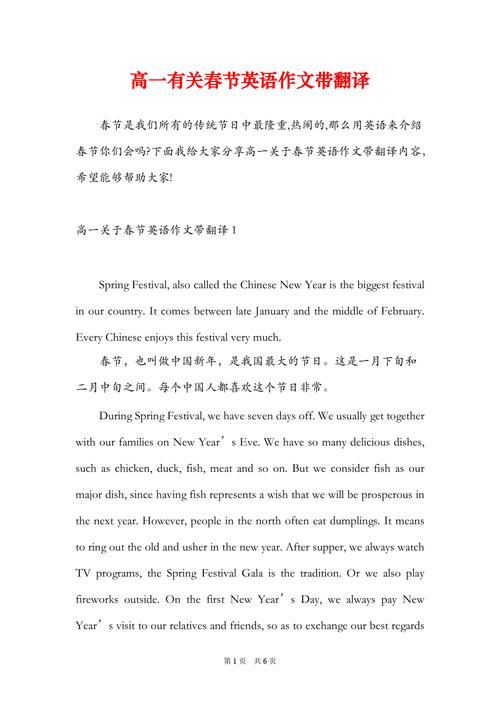
范例与解析:过年英语作文 The Unfading Flavor of Home**
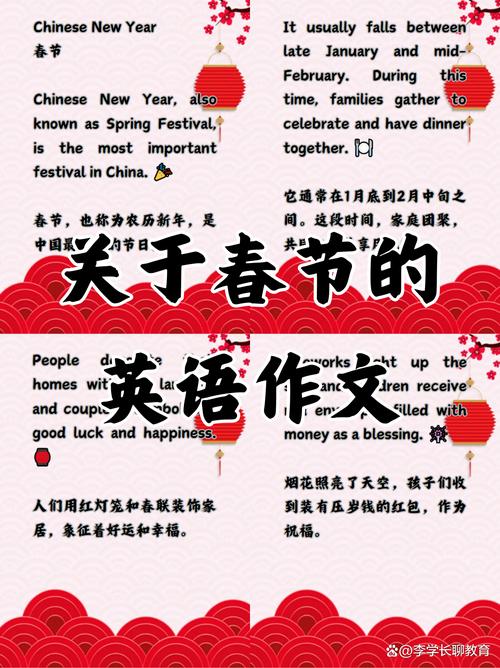
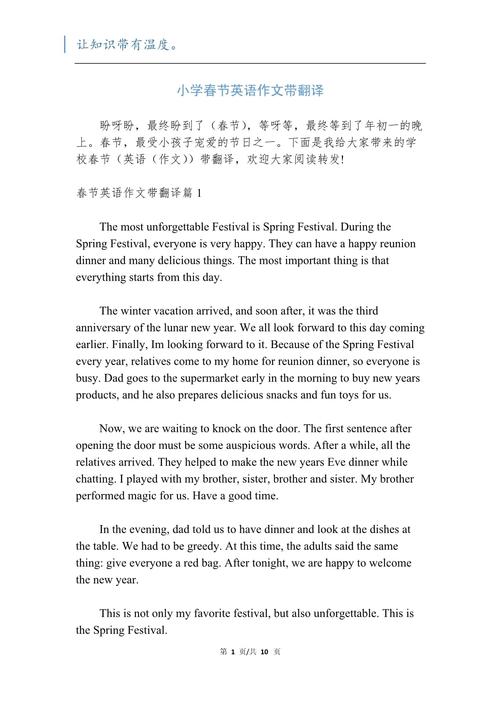
The most anticipated moment of my year arrives not with a calendar flip, but with the distinct aroma of ginger and scallion sizzling in hot oil, emanating from my mother’s kitchen. This scent, the prelude to our family’s reunion dinner, is my authentic Chinese New Year. It signifies more than a feast; it is an annual ritual of love, memory, and continuity.
While many associate the festival with deafening firecrackers or dazzling lion dances, the heart of my celebration lies in the kitchen. Days before the eve, my mother, grandmother, and I become a dedicated assembly line. My grandmother, with hands etched by time, meticulously folds dumpling skins, each pleat representing a wish for prosperity. My mother marinates the fish, explaining that it symbolizes abundance year after year. My task, stirring the glutinous rice cake, requires patience and constant effort, mirroring the perseverance needed in life. In these collaborative preparations, stories from past New Years are shared, laughter is exchanged, and the intangible family heritage is passed down through gestures and shared focus. This process, quiet and unhurried, grounds the holiday in profound meaning far beyond mere consumption.
The reunion dinner itself is the crescendo. As we gather around the table laden with symbolic dishes, the conversation flows freely. We recount achievements and gentle mishaps from the past year, offer encouragement for the future, and simply enjoy the comfort of presence. The giving of Hongbao follows, a gesture not merely of monetary gift but of blessing and protection from elders to the younger generation. Later, as we watch the Spring Festival Gala, the familiar skits and songs provide a shared cultural backdrop, connecting our small family to millions across the nation participating in the same tradition.
In an era of rapid modernization, some traditions evolve. Digital Hongbao and video call greetings have become convenient supplements. Yet, in my family, the core remains untouched. The physical gathering, the hands-on food preparation, and the face-to-face conversations are sacred. They are our anchor, reminding us of who we are and where we come from. The flavor of my mother’s dishes, especially the New Year cake, tastes of nostalgia, belonging, and hope—a flavor that no technological advancement can replicate.
As the New Year festivities conclude, carrying me back to my routine life, that unique flavor lingers. It sustains me, a tangible connection to my roots and a warm reminder that no matter the distance, home and its traditions await, unchanging and comforting. This enduring connection, fostered and celebrated each Spring Festival, is the greatest fortune I possess.
写作要点解析:
- 视角独特:以“母亲厨房的香气”作为文章主线,贯穿亲情、传统与个人记忆,避免笼统介绍习俗。
- 结构清晰:引言以细节引入主题;主体两段分别详写“准备过程”与“庆祝时刻”;结尾升华至传统在现代中的价值与个人感悟。
- 语言运用:使用了“prelude”(前奏)、“crescendo”(高潮)等比喻,以及“etched by time”、“tangible connection”等形象表达,句式多变,有复合句也有简洁短句,节奏感强。
- 文化传递:对“鱼”、“饺子”、“年糕”、“红包”、“春晚”等元素进行了自然融入与解释,使不熟悉中国文化的读者也能理解其情感与文化内涵。
提升英语作文能力,关键在于持续练习与反思,建议从熟悉的文化主题入手,如春节,因为您拥有丰富的情感与细节储备,动笔前,先构思清晰的脉络;完成后,反复朗读修改,检视逻辑、替换平庸词汇、优化句式,也可以阅读优秀范文,分析其结构妙处与表达亮点,写作不仅是语言的输出,更是思维的整理与文化的对话,当您能用英语真挚地讲述属于自己的春节故事时,便已在沟通的桥梁上,迈出了坚实而优美的一步。