
雅思大作文的核心要素与备考策略
雅思大作文作为写作模块的重要组成部分,占据整个写作考试分值的60%,其表现直接影响最终成绩,与Task 1相比,Task 2更注重考生的逻辑思维、语言表达和论证能力,本文将从题型分类、评分标准、结构布局、语言技巧及备考建议五个方面,系统解析雅思大作文的备考要点,帮助考生高效提升写作水平。
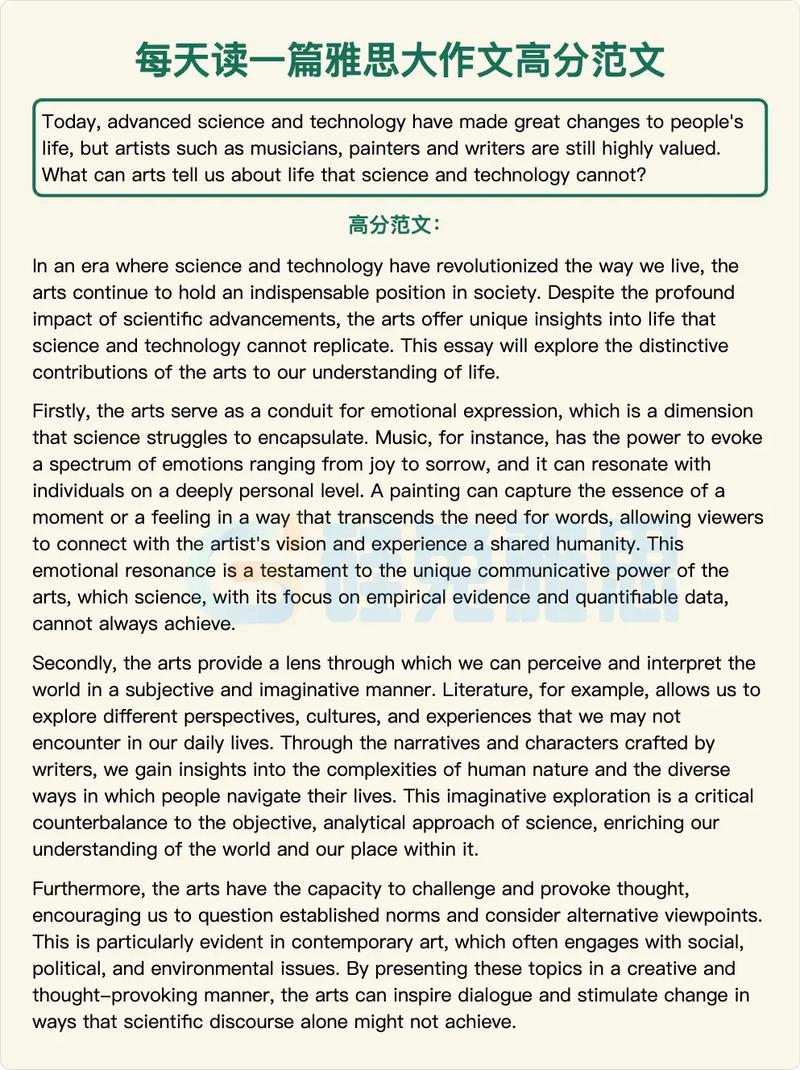
雅思大作文题型分类与特点
雅思大作文通常包含五大题型,每种题型有不同的侧重点和答题策略:
-
同意与否(Agree or Disagree)
要求考生明确表达对某一观点的立场,并从多个角度展开论证。“Some people believe that university education should be free for everyone. To what extent do you agree or disagree?” 此类题目需避免中立立场,需清晰支持或反对某一观点。 -
讨论双方观点(Discuss Both Views)
考生需客观分析两种对立观点的合理性,并可能给出个人倾向。“Some people think that environmental problems should be solved by governments, while others believe that individuals should take action. Discuss both views and give your opinion.” -
利弊分析(Advantages and Disadvantages)
针对某一现象或政策,分析其积极和消极影响。“Many people now choose to work from home. What are the advantages and disadvantages of this trend?” (图片来源网络,侵删)
 -
问题与解决方案(Problem and Solution)
先指出某一社会问题的成因,再提出可行的解决方法。“Overpopulation in many cities causes serious problems. What are the main causes of this problem, and what measures can be taken to solve it?” -
混合题型(Mixed Type)
结合上述两种或多种题型,“Some people argue that economic growth is the only way to measure a country’s success, while others believe that other factors are more important. Discuss both views and give your opinion.”
以下是题型分类的简要对比:
| 题型 | 核心任务 | 结构建议 |
|---|---|---|
| 同意与否 | 明确立场,单方论证 | 引言+观点+论点1+论点2+结论 |
| 讨论双方观点 | 平衡分析双方观点,可能给出个人意见 | 引言+观点A+观点B+个人立场+结论 |
| 利弊分析 | 列出优缺点,可适当倾向某一观点 | 引言+优点+缺点+个人看法 |
| 问题与解决方案 | 分析原因,提出具体解决措施 | 引言+问题+原因+解决方案+结论 |
雅思大作文评分标准解析
雅思写作评分依据四个维度:任务回应(Task Response)、连贯与衔接(Coherence and Cohesion)、词汇资源(Lexical Resource)、语法范围与准确性(Grammatical Range and Accuracy)。
-
任务回应(TR)
考生需完整回答题目要求,观点明确、论据充分,在“同意与否”题型中,若未明确表达立场,TR得分将低于5分。 -
连贯与衔接(CC)
文章需有清晰的结构,段落之间逻辑衔接自然,可通过使用连接词(如“However”, “Therefore”, “In addition”)和主题句增强连贯性。 -
词汇资源(LR)
考核词汇的丰富性、准确性和灵活性,避免重复使用简单词汇,适当替换同义表达(如用“detrimental”替代“harmful”)。 -
语法范围与准确性(GRA)
需展示多样的句式结构(如复合句、虚拟语气),同时减少语法错误,频繁使用简单句会导致GRA得分偏低。
文章结构布局与段落规划
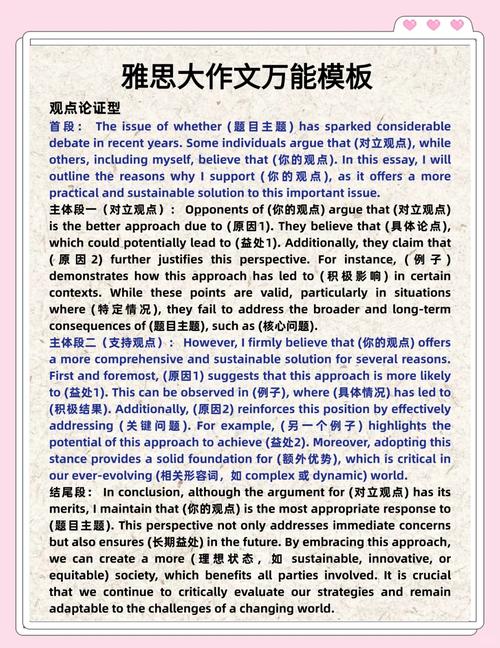
一篇优秀的雅思大作文通常遵循“引言-主体-的三段式结构,每部分需合理分配字数(引言约80词,主体约400词,结论约80词)。
-
引言段(Introduction)
- 重述题目(改写关键词),避免直接复制原题。
- 明确表达立场或文章主旨。
- 示例:“While some argue that technology has improved communication, others believe it has led to social isolation. This essay will discuss both perspectives before arguing that technology’s impact depends on its usage.”
-
主体段(Body Paragraphs)
- 每段聚焦一个核心论点,以“主题句+解释+例子+展开。
- 使用逻辑连接词确保段落衔接(如“Firstly”, “Moreover”, “On the other hand”)。
- 示例:“Firstly, technology has enhanced global connectivity through social media platforms, enabling instant communication across borders. For instance, during the COVID-19 pandemic, video conferencing tools like Zoom allowed businesses and families to maintain relationships despite physical distancing.”
-
结论段(Conclusion)
- 总结主体段论点,重申个人立场。
- 避免引入新观点,可提出建议或展望未来。
- 示例:“In conclusion, while technology poses risks to social interaction, its benefits in fostering connectivity are undeniable. Therefore, individuals should leverage technology mindfully to maximize its positive effects.”
语言表达与论证技巧
-
词汇与句式多样性
- 避免重复使用简单词汇,积累同义替换(如“important”→“crucial”, “significant”)。
- 结合简单句、复合句和复杂句,“Although technology has revolutionized communication, it is essential to recognize its potential drawbacks.”
-
论证逻辑性
- 论点需与题目直接相关,避免偏离主题。
- 使用具体例子(数据、案例、个人经历)增强说服力,在讨论“远程工作的利弊”时,可引用“2025年斯坦福大学的研究显示,远程办公 productivity提升了13%”。
-
避免常见错误
- 语法错误:主谓不一致、时态混乱、冠词缺失。
- 逻辑漏洞:论点与论据脱节,因果关系不明确。
备考建议与资源推荐
-
日常积累
- 阅读《经济学人》《卫报》等外刊,积累地道表达和论证素材。
- 练习写作时,使用雅思真题(如剑桥雅思系列),严格计时(40分钟内完成)。
-
反馈与修改
- 请老师或高分考生批改作文,重点关注TR和CC维度。
- 建立个人语料库,整理高频话题词汇(如教育、环境、科技)。
-
模拟训练
每周完成2-3篇大作文练习,逐步提升写作速度和质量。
FAQs
雅思大作文是否需要背诵模板?
答:不建议完全依赖模板,模板可能导致文章结构僵化、内容空洞,影响TR和CC得分,考生应掌握基本框架,但需根据题目灵活调整内容,注重逻辑和个性化表达。
如何在写作中避免中式英语?
答:多阅读英文原版材料,学习地道的句式和搭配,写作时先列出中文提纲,再直接用英文表达,避免“翻译式写作”,注意冠词、介词等细节,play an important role”而非“play important role”。