雅思作文高分过渡是提升文章连贯性与逻辑性的关键环节,优秀的过渡能够使段落之间、句子之间自然衔接,让观点表达更清晰、论证更严密,过渡并非简单的连接词堆砌,而是基于对文章结构的整体把握和逻辑关系的精准呈现,具体可从宏观结构过渡、微观句间过渡、逻辑关系过渡及多样化表达四个维度展开,同时需注意避免常见误区。
宏观结构过渡:搭建文章框架的“骨架”
雅思作文(尤其是Task 2议论文)通常包含引言、主体段(2-3段)、结论三大部分,宏观过渡的核心是让各部分的起承转合清晰明了,引导读者顺畅跟随论证思路。
引言到主体段的过渡
引言部分需明确观点,而主体段过渡需引出具体分论点,常用方式包括:
- 观点承接式:在引言结尾提出总论点后,用“First and foremost, ...” “To begin with, ...”引出第一个主体段,或用“Nowadays, the issue of [主题] has sparked widespread debate, and several key factors deserve careful examination.”自然切入分论点。
- 问题聚焦式:若引言提及现象背景,可用“Among these factors, [分论点1] plays a pivotal role.” “What specifically contributes to this phenomenon? Primarily, [分论点1] should be taken into account.”将焦点转向具体原因/影响。
示例:
引言:“In contemporary society, the increasing reliance on digital devices has raised concerns about its impact on interpersonal relationships.”
过渡:“To delve deeper into this issue, two primary aspects—communication patterns and emotional connection—need to be analyzed.”
主体段之间的过渡
主体段之间需体现逻辑递进(如“原因→影响”“正面→反面”“主要→次要”),避免观点重复,过渡可从以下角度切入:
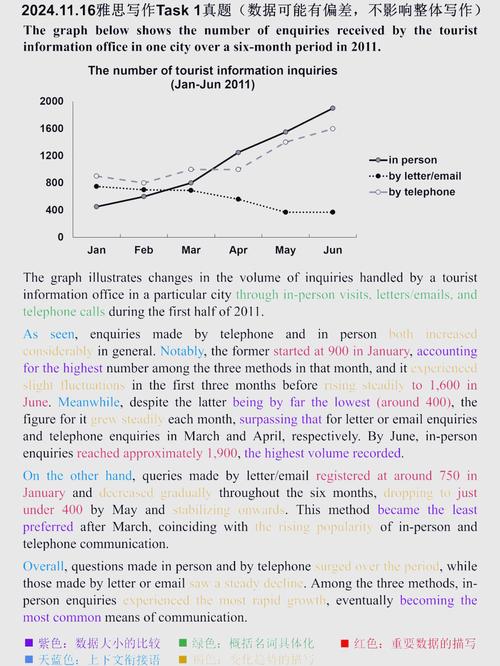
- 递进关系:用“Furthermore, ...” “Moreover, ...” “In addition to [前段论点], [后段论点] also exerts a significant influence.”补充更深层论点。
- 转折对比:若后段与前段观点相反或互补,用“However, this argument is not without limitations.” “Conversely, some people hold that [相反观点], which highlights another dimension of the issue.”
- 例证/数据承接:用“A case in point is that ...” “Statistics from [来源] reveal that ...”引出具体论据,或用“Having explored the causes, it is equally important to consider its consequences.”自然转向影响分析。
示例:
前段主体段(论点:数字设备减少面对面交流):“The overuse of smartphones has eroded face-to-face interactions, as people tend to focus on screens rather than real-world conversations.”
后段主体段(论点:数字设备改变情感表达方式):“Beyond communication frequency, the quality of emotional connection has also been transformed. For instance, ...”
主体段到结论的过渡
结论需总结全文并升华观点,过渡需避免重复,而是提炼核心逻辑,常用方式:
- 总结概括式:“In light of the above discussions, the correlation between [主题] and [影响] is evident.” “Taken together, the factors of [论点1] and [论点2] collectively shape the landscape of [主题].”
- 建议/展望式:“Given these considerations, it is imperative that individuals/society take measures to [建议].” “Looking ahead, striking a balance between [A] and [B] will be crucial for addressing this challenge.”
示例:
“Overall, while digital devices offer convenience, their excessive use poses tangible risks to interpersonal relationships. Only by fostering mindful usage can we harness technology’s benefits without sacrificing human connection.”
微观句间过渡:强化句子逻辑的“纽带”
句间过渡关注句子内部的逻辑衔接,通过连接词、指代词、重复关键词等方式确保信息流畅,避免突兀。
连接词的精准使用
连接词需根据逻辑关系选择,避免滥用“and”“but”,常见逻辑关系及对应连接词如下:
| 逻辑关系 | 连接词示例 |
|---|---|
| 并列/补充 | Additionally, besides, similarly, equally importantly, not only...but also... |
| 转折/对比 | However, nevertheless, conversely, on the contrary, while, whereas |
| 因果 | Therefore, thus, consequently, as a result, owing to, due to, hence |
| 举例 | For example, for instance, a case in point, to illustrate, take...as an example |
| 强调 | Indeed, in fact, notably, particularly, above all |
| 让步 | Although, though, despite, in spite of, even if, granted that |
示例:
错误:“Many people prefer online shopping. It is convenient.”(缺少过渡,逻辑断裂)
修正:“Many people prefer online shopping, primarily because it offers unparalleled convenience.”(用“primarily because”体现因果)
指代词与关键词重复
- 指代词:用“this, these, that, such, it”等指代前文内容,避免重复。“The rise of remote work has transformed urban lifestyles. This trend has led to decreased demand for commercial office spaces.”(“This trend”指代前句“rise of remote work”)
- 关键词重复/同义替换:核心主题词需在文中反复出现,但可通过同义词(如“digital devices”→“technology”→“smartphones”)或上下义替换保持多样性,同时用“in this context, as mentioned above”等短语强化衔接。
句式结构过渡
通过句子结构的变化体现逻辑,如使用“Not only does [A] affect [B], but it also influences [C].”(倒装强调并列)、“While some argue [观点A], others maintain [观点B].”(对比转折)等复杂句式,使句间关系更紧密。
逻辑关系过渡:论证深度的“核心”
过渡的本质是逻辑的呈现,需明确观点之间的因果、递进、转折等关系,避免“观点堆砌”。
因果逻辑过渡
论证现象原因或影响时,需清晰标注因果关系,避免“因为A,所以B”的简单罗列,可使用:
- 因果链条:“The proliferation of social media (原因1) has reduced face-to-face interactions (结果1), which in turn weakens emotional bonds (结果2).”
- 多因一果/一因多果:“Several factors contribute to this phenomenon: first, ...; second, ...; consequently, ...” “This policy may lead to three major outcomes: initially, ...; furthermore, ...; ultimately, ...”
示例:
“Excessive screen time among adolescents is often attributed to two main factors: the easy access to smartphones and the lack of outdoor recreational facilities. As a result, sedentary lifestyles have become increasingly prevalent, contributing to rising rates of obesity and poor eyesight.”
递进与转折逻辑
递进需体现观点的深化,转折需明确对立或补充,避免模糊表述。
- 递进:“The government should not only invest in public transportation but also promote cycling infrastructure to alleviate traffic congestion.”
- 转折:“While artificial intelligence brings efficiency to workplaces, it also poses threats to job security, particularly for repetitive roles.”
多样化表达:避免过渡“模板化”
高分过渡需灵活运用不同表达方式,避免过度依赖单一连接词(如“however”在每段开头重复),可通过以下方式提升丰富性:
短语替代连接词
- 用“In the first place”替代“Firstly”
- 用“More importantly”替代“Moreover”
- 用“As far as I am concerned”替代“I think”
动词/介词短语过渡
用“Regarding [主题], ...” “With respect to [观点], ...” “From the perspective of [角度], ...”等短语引出话题,或用“Turning to [新论点], ...” “Another key aspect is [论点]”实现段落切换。
示例:
“Regarding the environmental impact of fast fashion, the excessive use of synthetic dyes and water resources remains a pressing concern.”
上下文语义衔接
通过前文提到的“问题”引出后文的“解决方案”,或用“Having analyzed the drawbacks, potential solutions can be proposed.”自然过渡,而非机械使用“First, second, third”。
过渡常见误区与规避
- 过度依赖连接词:连接词是辅助工具,逻辑清晰比堆砌连接词更重要,若句子本身逻辑明确,可省略连接词(如“Rainfall increased. Crop yields improved.”因果已隐含)。
- 逻辑关系错误:避免将“转折”连接词用于“并列”关系(如用“but”连接两个并列观点),需根据语义选择连接词,确保匹配逻辑。
- 重复冗余:避免使用冗余过渡(如“in my personal opinion, I believe”),可通过“From my perspective”简洁表达。
相关问答FAQs
Q1:雅思作文中是否需要每段都使用过渡词?
A1:并非每段都必须使用过渡词,过渡的核心是逻辑连贯而非形式堆砌,若段落内部句子间逻辑已通过句式结构、指代词等自然衔接,可无需额外添加过渡词,描述数据趋势时,可通过“the number increased from...to...”直接体现变化,无需强行插入“furthermore”,过度使用过渡词可能导致文章生硬,反而影响流畅度。
Q2:如何避免过渡词使用单一化?
A2:可通过以下方式提升过渡表达的多样性:一是积累同义过渡短语(如“however”可替换为“nevertheless”“conversely”“on the contrary”);二是根据逻辑关系选择不同类型的过渡手段(如用“a case in point”举例,用“as a result”表因果,用“more importantly”表递进);三是结合句式变化(如倒装句、从句)实现衔接,而非依赖单一连接词,用“Not only does this policy benefit the environment, but it also boosts the economy.”替代“Moreover, this policy benefits the economy and the environment.”,既体现并列逻辑,又丰富句式。