雅思大作文的模板并非简单的固定句式堆砌,而是需要结合不同题型特点,构建具有逻辑框架、灵活替换内容的写作结构,以下从题型分类、核心模块、高分技巧及实例拆解等方面,提供一套系统性的雅思大作文写作模板思路,帮助考生在考场上快速搭建文章框架,同时保证内容的针对性与深度。
题型分类与核心框架
雅思大作文主要分为五大题型:同意与否(Agree or Disagree)、讨论双方观点(Discuss Both Views)、利弊分析(Advantages and Disadvantages)、问题解决(Problem and Solution)、混合题型(Mixed Essay),不同题型的结构存在差异,但核心均可归纳为“引言-主体-三段式框架,每个模块需根据题型调整论证逻辑。
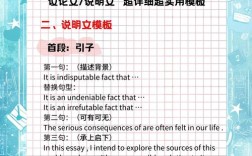
(一)引言段(Introduction)
引言段需完成三个任务:背景引入、话题重述、立场明确(部分题型无需立场),通常控制在3-5句话,避免冗长。
-
背景引入:用宏观背景或普遍现象引出话题,可使用“Nowadays, In contemporary society, Over the past decade”等时间状语开头。
例:In contemporary society, the proliferation of social media has fundamentally reshaped interpersonal communication, sparking intense debates about its impact on human relationships. -
话题重述:改写题目中的核心观点,避免直接复制原题,可通过同义词替换、句式变换(如主动变被动、合并短句)实现。
例:While some argue that online platforms enhance connectivity by breaking geographical barriers, others contend that they erode the quality of face-to-face interactions.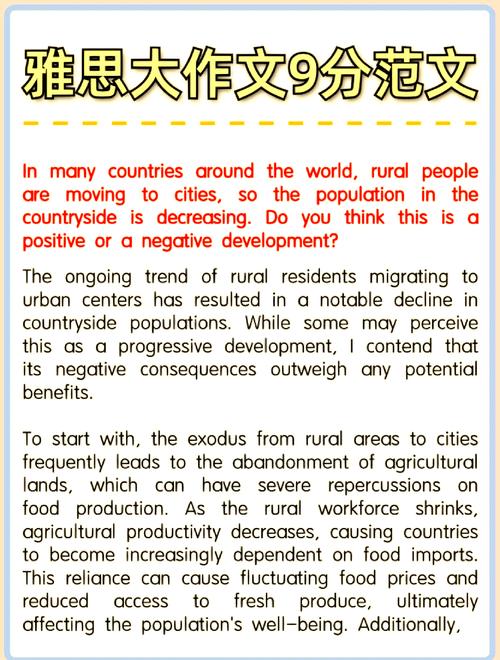 (图片来源网络,侵删)
 -
立场明确:
- 同意与否题型:直接表明立场(如“From my perspective, I largely agree with the notion that...”或“I believe this viewpoint is flawed due to...”)。
- 讨论双方观点题型:说明讨论双方观点后,可表明个人倾向(如“Although both perspectives hold merit, I am inclined to argue that...”),或保持中立(如“This essay will examine both arguments before presenting a balanced conclusion.”)。
- 问题解决题型:点明问题的严重性及解决必要性(如“Given the severity of this issue, effective measures must be implemented to address...”)。
(二)主体段(Body Paragraphs)
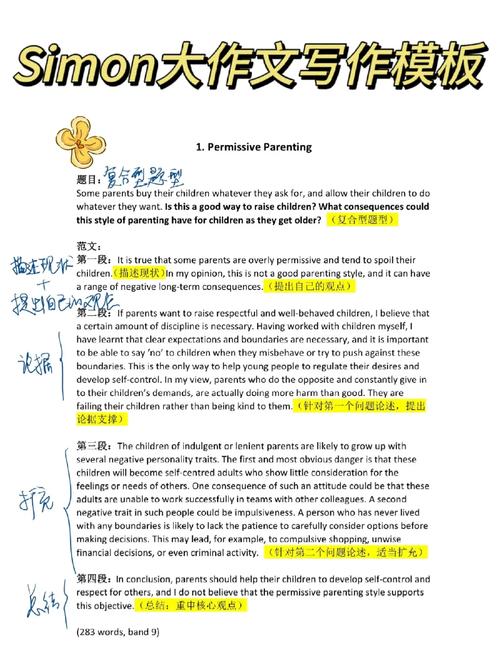
主体段是文章核心,通常包含2-3个段落,每段聚焦一个分论点,遵循“观点句-解释句-举例句-小结句”的逻辑链条。
-
观点句(Topic Sentence):明确段落核心论点,需与引言中的立场一致,且具体可证。
例:First and foremost, the primary advantage of social media lies in its ability to foster global connectivity. -
解释句(Explanation):对观点句进行拓展,说明原因、影响或机制,可使用逻辑连接词(如“due to,” “as a result,” “this is because”)。
例:Unlike traditional communication methods that were limited by physical distance, social media platforms enable individuals to maintain relationships with friends and family across continents through instant messaging and video calls, which significantly reduces the cost and time associated with long-distance communication.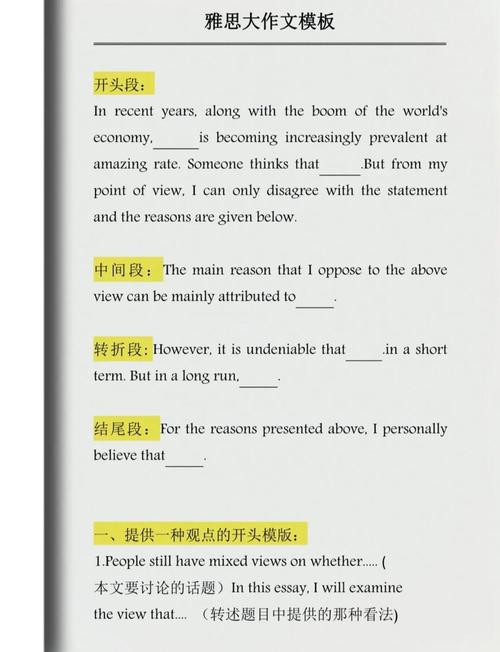 (图片来源网络,侵删)
 -
举例句(Example):用具体事例、数据或个人经历支撑观点,增强说服力。
例:For instance, during the COVID-19 pandemic, social media played a pivotal role in enabling people to stay connected when physical meetings were prohibited, with platforms like Zoom and WhatsApp reporting a 300% increase in daily active users. -
小结句(Concluding Sentence):重申段落观点,可引出下文或呼应主体段逻辑。
例:Thus, the role of social media in bridging geographical gaps cannot be overlooked.
(三)结论段(Conclusion)
结论段需总结主体段论点,重申立场,并提出建议或展望,避免引入新观点,通常控制在2-3句话。
-
总结论点:概括主体段的核心内容,可使用“In conclusion,” “To sum up,” “Overall”等开头。
例:In conclusion, while social media may pose certain risks to interpersonal relationships, its benefits in enhancing global connectivity and facilitating information sharing far outweigh the drawbacks. -
重申立场/提出建议:根据题型调整,问题解决题型可提出具体措施,其他题型可强调个人观点或未来趋势。
例:Therefore, individuals should leverage social media responsibly, while governments and tech companies must collaborate to mitigate its negative effects, ensuring it serves as a tool for positive social change.
分题型结构差异与模板句式
(一)同意与否(Agree or Disagree)
- 结构:引言(表明立场)- 主体段1(支持理由1)- 主体段2(支持理由2)- 重申立场)。
- 模板句式:
- 立场:I firmly believe that... / The notion that... is questionable, as...
- 转折(若部分同意):While I acknowledge the potential merits of..., I am more convinced by...
(二)讨论双方观点(Discuss Both Views)
- 结构:引言(双方观点+个人倾向)- 主体段1(观点A+理由)- 主体段2(观点B+理由)- 平衡或倾向一方)。
- 模板句式:
- 观点A:Proponents of this argument claim that... / The primary argument in favor of... is that...
- 观点B:On the other hand, critics argue that... / Conversely, there is a strong case to be made for...
(三)问题解决(Problem and Solution)
- 结构:引言(问题背景+严重性)- 主体段1(问题原因/影响)- 主体段2(解决方案)- 总结方案+展望)。
- 模板句式:
- 问题:The issue of... has become increasingly prevalent in modern society, leading to severe consequences such as...
- 解决方案:To tackle this problem, a multi-faceted approach is required, involving governments, individuals, and corporations. For example, governments could... while individuals should...
高分技巧与注意事项
-
灵活替换模板词:避免过度使用“firstly, secondly, thirdly”,改用“Initially,” “Furthermore,” “More importantly”等连接词;用“this phenomenon,” “this trend”替代重复的“this issue”。
-
句式多样化:穿插使用简单句、复合句(定语从句、状语从句)、倒装句(如“Only by doing so can we...”)等,避免句式单一。
具体化**:模板是骨架,需填充具体内容,例如讨论“远程办公利弊”,需结合疫情背景、行业特点(如科技行业vs制造业)展开,而非空谈“便利性”“效率”。 -
逻辑连贯性:确保段落间、句子间逻辑清晰,使用“However,” “Nevertheless,” “In addition”等过渡词,避免跳跃性论述。
主体段逻辑结构示例表
| 模块 | 功能 | 常用句式/结构 | 示例(以“社交媒体促进沟通”为例) |
|---|---|---|---|
| 观点句 | 段落核心论点 | The primary advantage of... is that... | The primary advantage of social media is its ability to break geographical barriers. |
| 解释句 | 拓展论点,说明原因 | This is because... / Due to... | This is because it allows real-time interaction regardless of distance. |
| 举例句 | 提供证据支撑 | For instance, / A case in point is... | For instance, a student studying abroad can video call their family daily at no cost. |
| 小结句 | 重申观点,承上启下 | Therefore, / Thus, / As a result, | Therefore, social media significantly enhances communication accessibility. |
相关问答FAQs
Q1:使用模板会导致文章雷同,如何避免?
A1:模板的核心是逻辑框架而非固定内容,考生需在保持结构清晰的基础上,结合题目具体要求填充个性化内容,使用与话题相关的具体案例(如环保话题可举例“哥斯达黎加的森林保护政策”)、替换同义词(如“important”替换为“crucial,” “vital”)、调整句式结构(如将“Many people think...”改为“There is a widespread perception that...”),可根据题目灵活增减段落,例如讨论双方观点题型中,若一方论点较弱,可合并为一个段落,避免机械套用“两段论”。
Q2:如何在考场上快速构思主体段分论点?
A2:可采用“五问法”(What-Why-How-Who-When)或“分类法”快速展开,以“是否应该禁止一次性塑料”为例:
- What:一次性塑料的定义与使用场景(如超市塑料袋、外卖餐盒)。
- Why:禁止的原因(环境污染、资源浪费、健康风险)。
- How:替代方案(可降解材料、循环利用政策、个人习惯改变)。
- Who:责任主体(政府立法、企业研发、消费者意识)。
从中选取2-3个角度作为分论点,确保每个论点有足够解释空间,主体段1谈“环境危害”(结合海洋生物数据),主体段2谈“替代方案可行性”(结合丹麦塑料税成功案例),避免泛泛而谈。