2月23日的雅思作文考试延续了近年来常见的社会生活类和科技发展类话题,题目可能涉及“传统与现代的冲突”“科技对人际关系的影响”或“个人选择与社会责任”等方向,这类题目通常要求考生不仅表达观点,还要结合具体例子进行深入分析,展现逻辑思维和语言运用能力,以下从题目类型分析、写作思路、范文结构和备考建议四个方面展开详细解析,帮助考生全面把握雅思作文的应对策略。
题目类型与核心考点分析
雅思大作文通常分为同意与否、讨论双方观点、利弊分析、报告类问题四种题型,结合2月23日的考试趋势,可能出现的题目类型及考点如下:
同意与否题型(Agree or Disagree)
“Some people believe that technology has made our lives more complex and stressful, while others argue that it has simplified our lives. Discuss both views and give your own opinion.”(有人认为科技让生活更复杂紧张,有人认为更简单,讨论双方观点并给出自己的意见。)
核心考点:考生需明确立场,既要平衡讨论双方观点,也要通过个人观点体现深度,需注意避免绝对化表述,如“完全同意”或“完全反对”,而是用“部分同意”“在特定条件下成立”等更严谨的逻辑。
讨论双方观点题型(Discuss Both Views)
“Some people think that governments should invest more in public services, while others believe that spending on arts and culture is equally important. Discuss both views and give your opinion.”(有人认为政府应更多投资公共服务,有人认为文化艺术投资同等重要,讨论双方观点并给出意见。)
核心考点:需对比两种观点的合理性与局限性,结合社会需求、财政分配等现实因素展开论述,例如公共服务涉及民生基础,文化艺术则关乎精神需求,两者并非对立而是互补。
利弊分析题型(Advantages and Disadvantages)
“With the increasing use of online learning, some people think traditional classrooms will disappear. Discuss the advantages and disadvantages of online education.”(随着在线学习普及,有人认为传统课堂将消失,讨论在线教育的优缺点。)
核心考点:需从教育公平、学习效果、互动性、技术依赖等维度展开,同时指出“传统课堂消失”这一观点的片面性,强调线上线下融合的可能性。
写作思路构建与结构设计
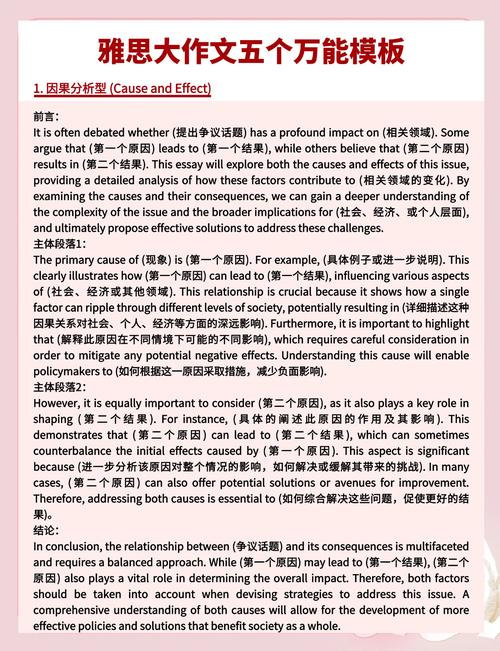
无论何种题型,雅思作文的核心逻辑是“引入观点—论证分析—结论升华”,以下以“科技对生活复杂性的影响”为例,拆解写作思路:
引言段(Introduction):背景+题目转述+ thesis statement
- 背景:从科技发展的普遍性切入,如“Over the past decade, technological advancements have permeated every aspect of human life, from communication to healthcare.” 转述**:用同义替换改写题目,如“While some argue that these innovations have introduced unnecessary complexity and stress, others contend they have streamlined daily routines.”
- thesis statement:明确立场,From my perspective, although technology may create certain challenges, its overall impact on simplifying life is more significant, as it enhances efficiency, expands access to information, and fosters global connectivity.”
主体段1(Body Paragraph 1):论证“科技简化生活”的分论点
- 主题句:“One of the most notable ways technology simplifies life is by enhancing efficiency in daily tasks.”
- 举例:移动支付取代现金交易(如支付宝、微信支付减少携带现金的麻烦);在线预约系统(如医院挂号、银行服务节省排队时间)。
- 分析:“For instance, in China, the widespread adoption of mobile payment has eliminated the need to carry cash, making transactions faster and more secure. Similarly, online booking systems for public services have reduced waiting times from hours to minutes, demonstrating how technology optimizes time management.”
主体段2(Body Paragraph 2):让步段( concession + refutation)
- 让步:“Admittedly, the rapid pace of technological change can lead to feelings of complexity and stress, particularly for older generations or those with limited digital literacy.”
- 反驳:“However, this issue is not inherent to technology itself but rather a result of inadequate education and support. Governments and tech companies have a responsibility to provide digital literacy programs, as seen in South Korea’s ‘Digital Literacy Campaign,’ which has helped seniors adapt to smart devices and reduced their anxiety about technology.”
主体段3(Body Paragraph 3):深化分论点“科技促进信息获取与连接”
- 主题句:“Beyond efficiency, technology has democratized access to information and strengthened global connections, further simplifying modern life.”
- 举例:搜索引擎(如Google、百度)让知识获取不再受地域限制;远程办公工具(如Zoom、Teams)打破物理距离,实现跨地域协作。
- 分析:“In the past, acquiring specialized knowledge required visiting libraries or consulting experts, but now platforms like Coursera and Khan Academy offer free courses from top universities. This has not only simplified self-education but also leveled the playing field for people in developing regions.”
结论段(Conclusion):总结观点+升华意义
- “In conclusion, while technology may present temporary challenges in terms of adaptation, its role in simplifying life through efficiency, information access, and global connectivity is undeniable.”
- 升华:“As society continues to innovate, the focus should be on inclusive technological development to ensure that its benefits are accessible to all, ultimately fostering a more convenient and interconnected world.”
语言表达与高分技巧
词汇多样性
- 避免重复使用“important”“good”“bad”等基础词汇,替换为“significant”“beneficial”“detrimental”等更精准的表达。
- 使用学术短语增强正式性,如“From a broader perspective”“It is imperative to note”“This phenomenon can be attributed to...”。
句式结构
- 复合句与复杂句结合,如“While some individuals may struggle to keep up with rapid technological changes, the long-term benefits of embracing innovation far outweigh the initial challenges.”
- 非谓语动词结构(如“Having revolutionized communication, smartphones have become indispensable in modern life”)减少重复主语。
逻辑连接词
- 使用“Furthermore”“Nevertheless”“Conversely”等连接词确保段落间衔接自然,避免逻辑断层。
备考建议与常见误区
备考建议
- 积累话题素材:针对科技、教育、环境等高频话题,整理观点和例子(如“远程办公的利弊”“塑料污染的解决方案”)。
- 练习审题:用5分钟分析题目关键词、题型和隐含要求,避免偏题。
- 限时写作:严格按照20分钟完成大作文的要求练习,提升时间管理能力。
常见误区
- 观点绝对化:避免使用“Technology is always harmful”等极端表述,改为“Excessive reliance on technology may lead to negative consequences”。
- 例子空洞:例子需具体,如不说“科技让沟通更方便”,而是“视频通话应用如FaceTime让海外留学生能与家人每周进行高清实时通话,缓解了思乡情绪”。
相关问答FAQs
Q1: 雅思作文中,如果我不完全同意题目中的任何一方,应该如何表达立场?
A1: 在雅思写作中,持“部分同意”或“辩证看待”的立场是完全可行的,反而能体现思维的全面性,具体做法是:先承认某一方的合理性(如“Technology undoubtedly brings convenience”),再指出其局限性(“However, over-reliance on it may lead to social isolation”),最后提出自己的观点(“Therefore, a balanced approach that leverages technology while maintaining human interaction is ideal”),通过让步段和对比论证,清晰表达“既不完全A也不完全B,而是C”的立场,避免陷入非此即彼的逻辑陷阱。
Q2: 如何在雅思作文中有效使用例子,避免内容显得泛泛而谈?
A2: 高质量的例子需满足“具体、相关、有分析”三个标准,例子要具体,避免模糊表述,如用“According to a 2025 report by the Chinese Ministry of Education, 78% of universities in China had adopted online teaching platforms during the pandemic, enabling students to continue studies despite campus closures”代替“Many universities used online teaching during the pandemic”,例子需与论点直接相关,论证“科技简化生活”时,应选移动支付、在线教育等与日常生活紧密相关的案例,对例子进行简要分析,说明其如何支撑论点,如“This example illustrates how technology ensures educational continuity, a key aspect of simplifying life under unexpected circumstances”,通过“具体数据+场景描述+逻辑分析”的组合,让例子成为论证的有力支撑而非简单堆砌。