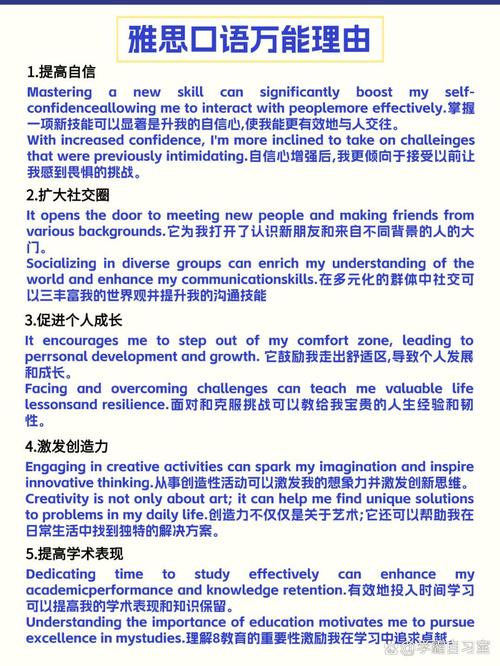
在雅思口语考试中,“有意思的谈话”是一个高频且开放性较强的话题,它不仅考察考生的语言表达能力,更考验其叙事逻辑、细节描写和情感传递的能力,要在这类话题中脱颖而出,关键在于构建一个生动、有层次的故事,通过具体的场景、人物互动和个人感悟,让考官感受到谈话的“有意思”之处,以下将从话题解析、结构拆解、词汇语法运用、范例分析及备考建议五个方面,详细探讨如何应对这一话题。
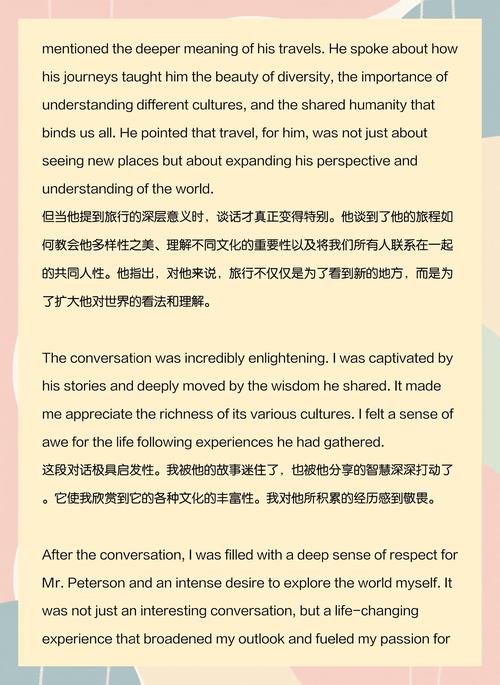
话题解析:什么是“有意思的谈话”?
“有意思的谈话”并非指内容必须幽默或离奇,而是强调谈话的独特性、启发性或情感共鸣,它可能是一次与陌生人的短暂交流,一次与长辈的深度对话,或是一场引发思考的辩论,核心在于“有意思”——即谈话让参与者获得了新的认知、情感体验或记忆点,在雅思口语中,考生需要明确谈话的对象、背景、核心内容和带来的影响,避免泛泛而谈。
结构拆解:如何组织回答内容?
一个完整的回答应包含“引入-发展-高潮-四个部分,每个部分需分配合理的时间(约2分钟),确保逻辑连贯、细节丰富。
引入(约20秒)
- 点明主题:直接说明谈话的基本信息(时间、人物、地点)。
例:“I'd like to talk about a really interesting conversation I had with my grandfather last summer during a family reunion.” - 概括特点:用一句话点明谈话为何“有意思”。
例:“What made it special was that it wasn't just small talk—we ended up discussing his life experiences during a historical period I'd only read about in books.”
发展(约40秒)
- 背景铺垫:描述谈话的场景、人物关系和起因。
例:“We were sitting in the garden after dinner, and the weather was perfect—cool breeze, fireflies blinking. My grandfather, who's usually quiet, suddenly started talking about his youth in the 1960s.” - :选取1-2个谈话中的具体细节或观点展开,避免流水账,可通过对比、引用或对话片段增强画面感。
例:“He told me about how he cycled 20 kilometers every weekend to borrow books from a library because there were no bookstores nearby. I was shocked—now we can get any book with a single click. He also mentioned a time when he and his friends built a radio from scratch just to listen to the news.”
高潮(约30秒)
- 情感或认知转折:突出谈话中最触动你的部分,体现“有意思”的核心。
例:“The most moving part was when he said, ‘We didn't have much, but we made the most of everything. That’s why I think your generation is so lucky—you have opportunities we never dreamed of.’ It made me realize how much we take for granted today.” - 互动细节:加入你的反应或提问,体现双向交流。
*例:“I asked him if he ever felt sad about missing out on modern technology, and he smiled and said, ‘No, because each generation has its own adventures. Your adventure is different, and that’s wonderful.’”
约30秒)
- 总结影响:说明谈话对你的后续影响或启发。
例:“That conversation changed my perspective on happiness and gratitude. I started asking my grandparents more about their lives, and now I even keep a journal to document their stories.” - 升华主题:联系更广泛的意义,展现思考深度。
*例:“It taught me that the most interesting conversations aren't just about exchanging information, but about connecting across generations and learning from each other's lives.”
词汇语法运用:提升表达准确性与丰富性
高频词汇
- 描述谈话:engaging, thought-provoking, insightful, eye-opening, memorable, stimulating
- 描述人物: wise, nostalgic, articulate, enthusiastic
- 描述场景: cozy, relaxed, nostalgic, serene
- 表达感受: I was blown away, It struck a chord, It gave me a new perspective, I couldn't help but reflect
复杂句型
- 定语从句:
例:“The conversation, which lasted until midnight, left a deep impression on me.” - 状语从句:
例:“After he shared that story, I began to appreciate the convenience of modern life more.” - 非谓语动词:
例:“Hearing about his struggles, I felt grateful for the opportunities I have.”
连接词
- 递进:moreover, furthermore, what's more
- 转折:however, nevertheless, on the contrary
- 因果:therefore, as a result, consequently
范例分析:模拟回答片段
以下为回答中“发展”与“高潮”部分的范例,标注了可借鉴的表达方式:
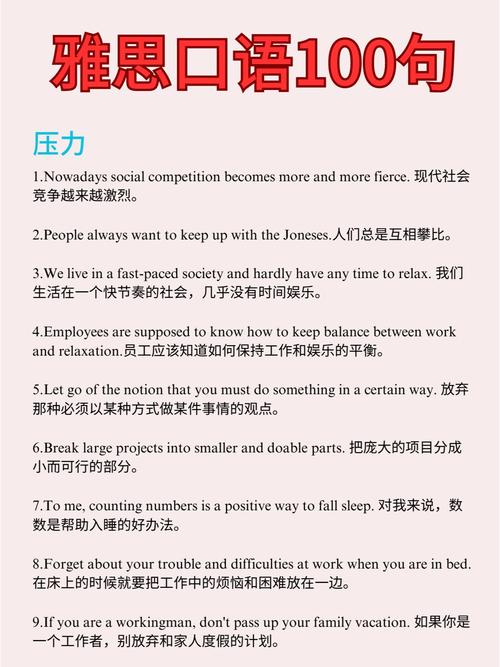
“We were in the living room, surrounded by old family photos, when my grandfather pointed at a black-and-white picture of a young man on a bicycle. ‘That’s me,’ he said, with a nostalgic smile. ‘I used to ride that bike every Sunday to the next town, just to visit a friend who loved poetry.’ I was curious—why go so far just for poetry? ‘Because,’ he replied, ‘in those days, poetry was our way of escaping reality. We didn’t have phones or TVs, so we talked, we read, we dreamed.’ His words made me think about how we escape reality now—through social media or movies, but rarely through deep conversations. I asked him if he ever felt lonely, and he said, ‘Lonely? No, because I had dreams. And dreams keep you company.’ That was the moment I realized the power of simplicity and hope. It wasn’t just a conversation about the past; it was a lesson about life.”
(图片来源网络,侵删)
亮点分析:
- 细节描写:通过“black-and-white photo”“old bicycle”等具体意象营造场景感。
- 对话引用:直接引用祖父的话,增强真实性和感染力。
- 对比手法:将过去的“poetry”与现在的“social media”对比,突出谈话的反思性。
- 情感升华:从“conversation about the past”到“lesson about life”,体现深度。
备考建议:如何高效准备?
积累个人经历
- 列出3-5段你认为“有意思的谈话”,包括与朋友、家人、老师或陌生人的对话。
- 每段谈话记录关键信息:时间、地点、人物、核心内容、你的感受。
模练与反馈
- 按照上述结构进行口头练习,录音并回听,检查逻辑连贯性和语法错误。
- 寻求老师或伙伴反馈,重点关注:细节是否具体、情感是否真实、语言是否多样。
拓展话题广度
- 准备不同场景的谈话:正式(如与教授讨论学术)、非正式(如与室友闲聊)、意外(如与陌生人帮助后的对话)。
- 练习将普通谈话转化为“有意思”的故事,通过挖掘细节和感悟提升质量。
注意避免的误区
- 避免流水账:只讲过程,不讲“有意思”的点在哪里。
- 避免虚假内容:编造经历可能导致表达不自然,真实的故事更易打动考官。
- 避免语法单一:过多使用简单句会显得语言能力不足,需合理穿插复合句。
相关问答FAQs
Q1: 如果谈话内容比较平淡,如何让它听起来“有意思”?
A1: 即使内容看似普通,也可以通过“细节放大”和“情感挖掘”来提升趣味性,一次普通的超市购物对话,可以聚焦于收银员的一个小举动(如多送了一张优惠券)和由此引发的关于“陌生人善意”的讨论,具体描述收银员的神态、你的心理活动,以及这次对话如何让你之后更乐于帮助他人,就能让平淡的经历变得生动。
Q2: 雅思口语中需要背诵模板吗?如何平衡准备和自然表达?
A2: 不建议完全背诵模板,因为模板化的回答容易缺乏个性,且可能在考官追问时露馅,正确的做法是“积累框架+填充个性化内容”,掌握“引入-发展-高潮-的结构,但每个部分用自己真实的经历填充词汇和句子,平时练习时,多用自己的语言复述同一个故事,逐渐形成自然流畅的表达习惯,而非依赖固定句型。