
在日常交流中,"capacity" 是一个高频使用的口语词汇,它不仅指物理空间或数量上的容纳能力,更常被用来描述人的能力、潜力或事物的处理极限,掌握这个词在不同语境下的灵活运用,能让表达更精准、更地道,以下从多个维度解析 "capacity" 的口语用法,帮助读者全面理解其含义与应用场景。
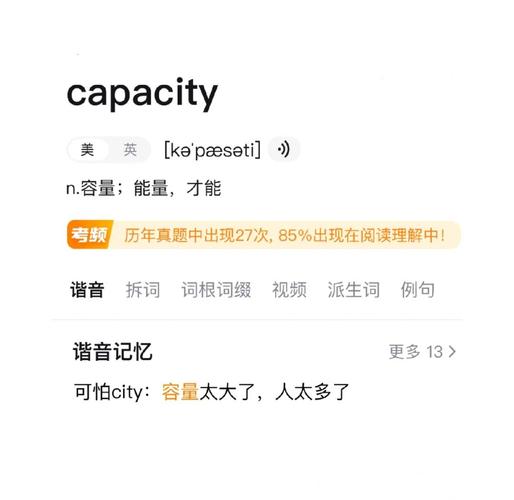
基础含义:物理容纳与数量承载
最基础的 "capacity" 指"容量"或"容纳能力",常用于描述容器、空间或设施的最大负荷。
- "The elevator has a capacity of 10 people."(电梯的载客量是10人。)
- "This stadium has a seating capacity of 50,000."(这个体育场的座位容量是5万个。)
在口语中,人们还会用 "at full capacity" 表示"满负荷运行":
- "The restaurant is always at full capacity on weekends."(这家餐厅周末总是客满。)
引申含义:人的能力与潜力
"capacity" 更常被用来描述人的能力、才能或学习潜力,此时它强调的是"内在的潜能"或"处理事务的能力"。
- "She has a great capacity for learning languages."(她有很强的语言学习能力。)
- "I was impressed by his capacity to stay calm under pressure."(他在压力下保持冷静的能力让我印象深刻。)
值得注意的是,"capacity" 在描述人时,常与特定能力搭配,形成固定表达:

- mental capacity(智力): "The job requires a high level of mental capacity."(这份工作需要很高的智力。)
- emotional capacity(情感承载力): "Do you have the capacity to forgive him?"(你有原谅他的胸怀吗?)
- leadership capacity(领导力): "The program aims to develop students' leadership capacity."(该项目旨在培养学生的领导力。)
实用场景:工作与生活中的高频表达
在职场和日常生活中,"capacity" 的灵活运用能让沟通更高效,以下是几个常见场景:
表达"忙不过来"
当想说自己或团队当前工作量饱和时,可以用 "at capacity" 或 "beyond capacity":
- "Sorry, I can't take on more tasks right now—I'm working at full capacity."(抱歉,我现在接不了更多任务了——已经满负荷工作了。)
- "The support team is beyond capacity due to the product launch."(因为产品发布,客服团队已经超负荷运转了。)
描述"处理能力"
在讨论系统、团队或个人的处理极限时,"capacity" 非常实用:
- "Our server doesn't have the capacity to handle this much traffic."(我们的服务器没有能力处理这么大的流量。)
- "The team lacks the capacity to complete the project by next week."(团队没有能力在下周前完成这个项目。)
谈论"潜力与可能性"
在鼓励他人或规划未来时,"capacity" 可表达对"潜力"的肯定:

- "You have the capacity to achieve anything if you work hard."(如果你努力,有能力实现任何目标。)
- "This new technology expands our capacity for innovation."(这项新技术扩展了我们的创新能力。)
搭配与辨析:让表达更精准
掌握 "capacity" 的常见搭配和近义词辨析,能避免使用误区,以下是高频搭配总结:
| 搭配 | 含义 | 例句 |
|---|---|---|
| at capacity | 满负荷,客满 | "The hospital is operating at full capacity."(医院在满负荷运转。) |
| beyond capacity | 超出负荷 | "The number of applicants was beyond our capacity."(申请人数超出了我们的承受范围。) |
| capacity for | ...的能力 | "He has a remarkable capacity for hard work."(他有非凡的吃苦耐劳能力。) |
| to capacity | 挤满,坐满 | "The theater was filled to capacity."(剧院座无虚席。) |
近义词辨析:
- ability:强调"已经具备的能力",侧重技能或技能的运用(如 "the ability to swim");
- capacity:更侧重"容纳或处理的潜力",可以是内在的、未完全开发的(如 "a capacity for leadership");
- capability:常用于系统、设备的"性能"或"可能性"(如 "the capability of new software")。
常见误区与注意事项
-
避免与 "ability" 混淆:
- 错误: "I don't have the capacity to speak French."(想表达"不会说法语")
- 正确: "I don't have the ability to speak French."("capacity" 更强调潜力,此处用 "ability" 更自然)
-
注意语境的褒贬色彩:
"Capacity" 本身是中性词,但搭配不同词组可能产生隐含意义。"a capacity for violence"(暴力倾向)带有负面含义,而 "a capacity for love"(爱的能力)则是褒义的。
相关问答FAQs
Q1: "capacity" 和 "volume" 有什么区别?
A1: 两者都可表示"容量",但侧重点不同。"Capacity" 强调"容纳能力",常用于描述容器、设施或人的潜力(如 "the capacity of a bottle", "mental capacity");而 "volume" 更侧重"体积"或"数量",多用于液体、气体或数据(如 "the volume of water", "data volume")。"The bottle's capacity is 1 liter, and its volume increases when filled with water."(瓶子的容量是1升,装水后体积会增加。)
Q2: 如何用 "capacity" 表达"我忙不过来了"?
A2: 可以用以下地道表达:
- "I'm at full capacity right now, so I can't help."(我现在满负荷工作,帮不了忙。)
- "My schedule is beyond capacity this week."(我这周的日程安排超负荷了。)
- "Sorry, I'm operating at maximum capacity."(抱歉,我已经在极限状态工作了。)