雅思线状图小作文是雅思写作Task 1中常见的图表类型,主要考察考生对动态数据的描述、分析和总结能力,这类图表通常展示某个或多个指标在一段时间内的变化趋势,考生需通过清晰的结构、准确的数据呈现和合理的逻辑衔接,全面反映图表信息,以下从核心要素、写作结构、常用表达及注意事项等方面展开分析,帮助考生高效掌握此类题型。
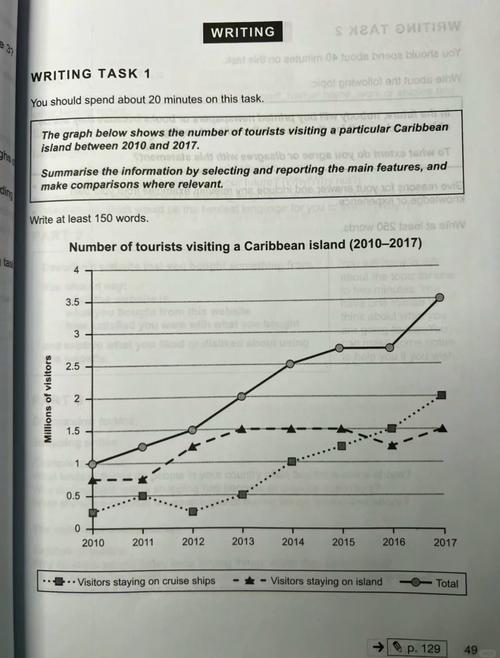
线状图小作文的核心要素
线状图的核心在于“动态变化”,考生需重点关注以下四类关键信息:
- 整体趋势:数据随时间的总体走向,如上升、下降、波动或保持稳定,某国2000-2025年GDP的持续增长,或某城市气温的季节性波动。
- 起点与终点:时间跨度内数据的初始值和最终值,反映长期变化结果,2010年某产品销量为100万件,2025年增至500万件,十年间增长显著。
- 峰值与谷值:数据在特定时间点的最高值和最低值,体现阶段性极值,某景区游客量在8月达到峰值(50万人次),2月跌至谷值(5万人次)。
- 交叉与对比:多条线交叉时反映的数据变化,或不同对象间的趋势差异,A国与B国碳排放量在2025年相交,之后A国持续下降而B国上升。
写作结构与内容安排
线状图小作文建议采用“四段式”结构,确保逻辑清晰、内容完整。
开篇段:图表概述(约50-70词)
开篇需简洁说明图表类型、时间范围及核心主题,无需展开细节,常用句式:
- "The line graph illustrates the changes in [指标] over the period from [起始时间] to [结束时间]."
- "As is depicted in the chart, the data presents the fluctuation of [具体数据] during [时间段]."
示例:
"The line graph illustrates the changes in the number of international tourists visiting Country A from 2010 to 2025. Overall, the number experienced a general upward trend, with a slight fluctuation between 2025 and 2025."
主体段一:单一主线或主要趋势描述(约150-200词)
若图表仅有一条线,需按时间顺序或变化阶段(如“上升期—波动期—稳定期”)描述关键节点;若有多条线,先概述整体趋势差异,再分别详述。
- 时间顺序法:以年份/月份为线索,串联数据变化。"In 2010, the figure stood at 100, which increased to 150 by 2012. However, it declined sharply to 80 in 2025 before recovering gradually."
- 阶段划分法:将时间划分为2-3个阶段,概括各阶段特征。"From 2010 to 2025, the data showed a steady growth, averaging an annual increase of 10%. Between 2025 and 2025, it remained relatively stable, fluctuating around 200."
数据呈现技巧:
- 使用“具体数据+趋势”结构,如“The number of tourists peaked at 500 in 2025, accounting for a 20% increase compared to 2025.”
- 避免简单罗列数据,需突出“变化”和“对比”。
主体段二:细节补充与对比分析(约150-200词)
若有多条线,此段需对比不同对象的变化差异,或补充关键细节(如交叉点、极值原因等)。
- 对比逻辑词:while/whereas, in contrast, similarly, conversely等。"While Country A's tourist number grew steadily, Country B witnessed a decline from 2025 onwards."
- 交叉点描述:明确交叉时间及双方数据值。"The sales of Product X and Product Y intersected in 2025, when both reached 300 units."
示例:
"Country B, however, followed a different pattern. After a slight rise to 180 in 2025, its tourist number dropped to 120 by 2025. The gap between the two countries widened significantly, with Country A's figure being four times that of Country B in the last year."
结尾段:总结核心趋势(约40-60词)
结尾需重申整体趋势,无需引入新数据,常用句式:
- "In summary, the data suggests that [核心趋势] during the given period."
- "To conclude, [指标1] and [指标2] showed contrasting trends, with [最显著变化] being the most notable feature."
常用表达与词汇积累
趋势描述
| 趋势类型 | 动词/短语 | 副词/形容词 |
|---|---|---|
| 上升 | increase, rise, grow, surge, climb | steadily, sharply, significantly |
| 下降 | decrease, decline, drop, fall | gradually, dramatically, slightly |
| 波动 | fluctuate, vary, oscillate | wildly, moderately, gradually |
| 保持稳定 | remain stable, stay constant, level off | relatively, consistently |
数据表达
- “占”:account for, constitute, make up
- “占比”:the proportion of... / the percentage of...
- “倍数”:twice as much as... / three times higher than...
- “约”:approximately, around, about, roughly
注意事项
- 时态统一:描述过去数据需用过去时(如increased, reached),若图表含未来预测(如“至2030年”),则需用将来时(is projected to rise)。
- 数据取舍:选取典型数据(如起点、终点、峰值、谷值、交叉点),避免堆砌所有数据。
- 逻辑衔接:使用连接词(however, furthermore, as a result等)确保段落连贯,"The initial growth was followed by a period of stability, after which a sharp decline was observed."
相关问答FAQs
Q1: 线状图小作文是否需要预测未来趋势?
A1: 不需要,雅思线状图通常基于历史数据,考生只需客观描述图表信息,无需添加主观预测或原因分析(如“未来可能继续上升”),若图表含预测数据(如“至2030年”),则需按图表信息描述,但不可自行推测。
Q2: 如何处理图表中数据过多的情况?
A2: 优先选取关键数据点:① 起始与终点值;② 明显的峰值/谷值;③ 多条线的交叉点;④ 典型变化阶段(如“2025-2025年持续下降”),通过分类(如“上升阶段”“下降阶段”)或对比(如“A国与B国趋势差异”)整合数据,避免逐点罗列。