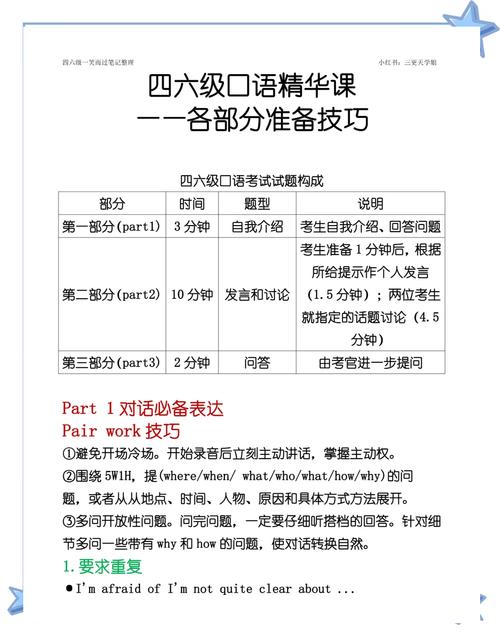
四级口语考试中的二人对话部分是考察考生英语实际运用能力的重要环节,主要测试在特定场景下进行信息交换、观点表达和互动沟通的能力,考试通常采用计算机化考试形式,考生需佩戴耳机,通过麦克风与虚拟或模拟伙伴完成对话,时长约3-5分钟,包含不同任务类型的组合,如短文朗读、问答、话题讨论等,以下从考试结构、常见话题、应试技巧及范例对话四个方面展开详细说明。
考试结构与任务类型
四级口语考试的二人对话部分一般分为三个任务阶段,每个阶段侧重不同的语言技能,具体如下表所示:
| 任务阶段 | 时长 | 考查重点 | 常见形式 |
|---|---|---|---|
| 短文朗读与问答 | 5分钟 | 发音准确性、语调自然度、信息抓取能力 | 考生朗读一篇120词左右的短文,随后系统提出2个与短文内容相关的问题,考生需简短回答。 |
| 话题陈述与回应 | 2分钟 | 逻辑组织能力、观点表达能力、语言连贯性 | 系统给出一个日常话题(如“大学生兼职”),考生A先陈述1-2分钟,考生B需回应并补充观点。 |
| 情景互动与讨论 | 5分钟 | 即时反应能力、互动协作能力、话题延展能力 | 考生根据给定情景(如“讨论周末旅行计划”)进行自由对话,需达成一致意见或解决问题。 |
常见话题与核心词汇
对话话题多围绕大学生活、社会热点、个人经历等贴近考生日常的内容,以下为高频话题及核心词汇参考:
- 校园生活:课程学习(curriculum, assignment, deadline)、社团活动(club, volunteer, extracurricular)、校园设施(library, dormitory, canteen)。
- 个人发展:职业规划(career goal, internship, qualification)、兴趣爱好(hobby, fitness, painting)、时间管理(time management, schedule, priority)。
- 社会热点:环境保护(environmental protection, recycling, sustainable development)、科技影响(smartphone, artificial intelligence, online learning)、文化差异(cultural diversity, tradition, custom)。
- 日常生活:健康饮食(balanced diet, fast food, organic food)、交通出行(public transportation, traffic jam, shared bike)、旅行休闲(travel destination, backpacking, itinerary)。
应试技巧与注意事项
- 发音与语调:注意元音饱满、辅音清晰,避免中式英语发音;通过升降调表达疑问、强调等语气,例如用升调表示“Really?”的惊讶。
- 逻辑连贯性:使用连接词(如Firstly, However, In conclusion)构建清晰逻辑,例如讨论“是否应该禁止校园内使用手机”时,可先表态,再分点阐述理由,最后总结。
- 互动与回应:积极回应伙伴观点,通过“I agree with you, but...”“That's a good point, and in my opinion...”等句式体现沟通意识,避免单方面陈述。
- 词汇与语法:优先使用熟悉的词汇和句型,确保语法准确;适当替换简单词汇(如用“beneficial”代替“good”),但避免生僻词导致表达卡顿。
- 时间控制:任务陈述阶段需合理分配时间,例如1分钟陈述中,10秒引入话题,40秒展开观点,10秒总结;讨论阶段避免长时间沉默,可用“Let me think for a moment”争取思考时间。
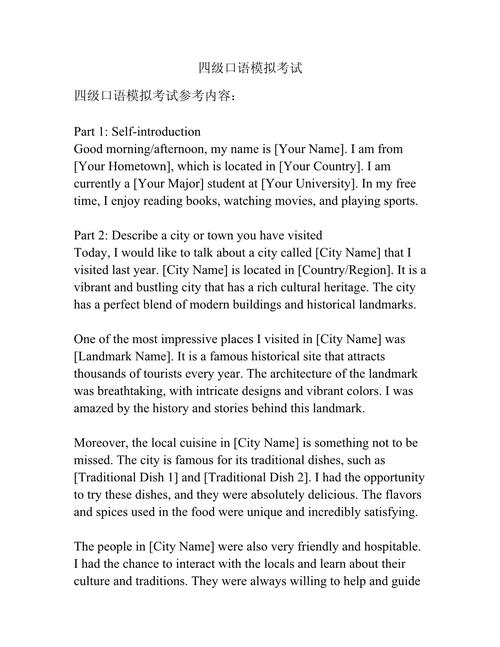
范例对话(话题:大学生兼职)
情景:考生A与考生B讨论“大学生是否应该兼职”,考生A支持兼职,考生B认为应以学业为重。
考生A: Hi, have you ever thought about taking a part-time job during college? I think it's a great idea for students to gain some work experience.
考生B: Well, I'm a bit hesitant. I'm worried that a part-time job might take up too much time and affect our studies. After all, our main task in college is to focus on our academic performance.
考生A: That's a valid concern. However, if we manage our time well, a part-time job can actually help us improve our time management skills. For example, I'm working as a tutor on weekends, and I've learned to balance my work and study by making a detailed schedule.
考生B: That sounds reasonable. But what if the job is too tiring? I've heard some friends say they felt exhausted after part-time work and couldn't concentrate in class the next day.
考生A: I agree that overwork is a problem. That's why we should choose a suitable job, like one with flexible hours or lighter physical work. Besides, part-time jobs can also teach us practical skills. For instance, working in a coffee shop helped me improve my communication skills with customers.
考生B: You have a point. Maybe I should reconsider. Do you think there are other benefits besides gaining experience?
考生A: Definitely! It can also help us earn some money to reduce our parents' financial burden. And more importantly, we can learn about the value of money through working.
考生B: That's true. I guess I was too focused on the potential negative aspects. Perhaps I'll look for a part-time job with fewer hours during the winter vacation.
考生A: Good idea! Just remember to prioritize your studies and choose a job that you're interested in. It should be a learning experience rather than a burden.
相关问答FAQs
Q1: 四级口语考试中,如果对话伙伴发音不清晰或表达较慢,会影响我的得分吗?
A1: 不会直接影响你的得分,考官会根据你个人的语言表现(发音、词汇、语法、互动能力)评分,而非与伙伴的对比,但如果伙伴表达困难,你可以通过主动引导(如“Could you speak a little slower?”“What do you think about...?”)体现沟通意识,这反而可能成为加分项。
Q2: 在话题讨论环节,如果与伙伴观点完全相反,应该如何应对?
A2: 无需强行一致观点,关键在于通过逻辑和语言展示互动能力,例如先肯定对方部分观点(“I see your point about...”),再委婉表达不同看法(“However, from my perspective...”),最后尝试寻找共同点(“Maybe we can both agree that...”),避免直接反驳(如“You're wrong”),保持礼貌和建设性态度即可。