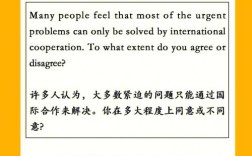
1月26日的雅思作文考试延续了近年来常见的题型特点,既包含社会生活类话题,也涉及教育发展类议题,考生需在有限时间内展现清晰的逻辑结构、丰富的论据支撑和准确的语言表达,以下从题目类型、核心考点、高分思路及范文框架等方面展开详细分析。
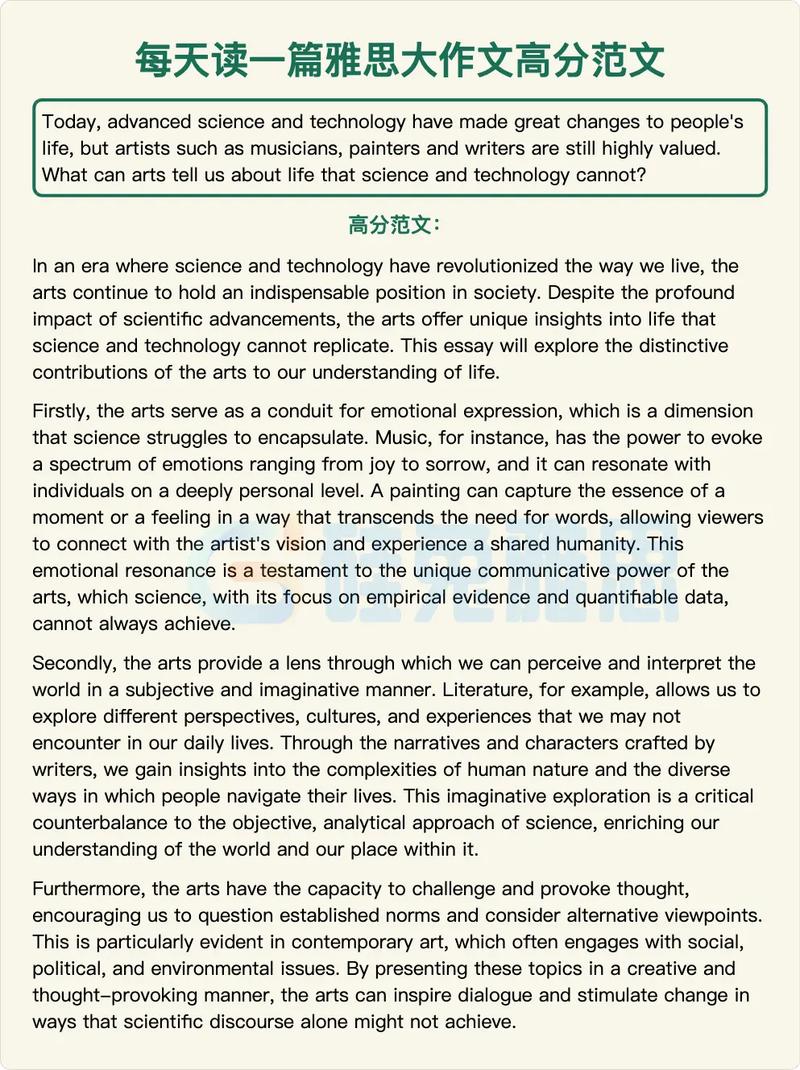
题目类型与核心考点分析
1月26日的雅思作文任务仍以“议论文”为主,涵盖“同意与否”和“讨论双方观点+给出个人立场”两大经典题型,从话题来看,可能涉及“科技对人际关系的影响”“教育方式的转变”“职业选择的标准”等贴近现实生活的议题,要求考生结合社会现象进行深度思考,而非单纯描述现象。
核心考点:
- 逻辑论证能力:能否通过“观点-解释-例证”的结构展开论述,论据是否具有说服力(如数据、案例、普遍认知等)。
- 辩证思维:对于“讨论双方观点”类题目,能否平衡呈现不同立场,避免极端化表述;对于“同意与否”题目,即使选择单一边界,也需简要提及对立观点的合理性。
- 语言精准度:包括词汇多样性(如避免重复使用“important”“good”等基础词汇)、语法复杂度(如从句、非谓语动词的恰当运用)以及衔接自然度(如过渡词“however”“furthermore”的合理使用)。
高分写作思路与框架构建 Some people believe that technology has made communication between people less personal. To what extent do you agree or disagree?”为例,以下为高分思路框架:
开头段(引出话题+表明立场)
- 背景引入:简述科技发展对沟通方式的变革(如社交媒体、即时通讯工具的普及)。 转述**:提出部分人认为科技导致人际关系“非个性化”的观点。
- 立场明确:承认科技确实带来一定负面影响,但总体上通过拓宽沟通渠道、丰富互动形式,反而增强了人际关系的深度与广度。
主体段1(让步段:承认科技的负面影响)
- 分论点:过度依赖虚拟沟通可能导致面对面交流能力下降,削弱情感共鸣。
- 解释:文字、表情符号等无法完全替代肢体语言、语气语调等非语言信号,易造成误解。
- 例证:举例说明,家庭成员长时间各自刷手机,即使同处一室也缺乏真实互动;朋友间通过微信聊天,却因无法感知对方情绪而产生矛盾。
主体段2(反驳段:科技拓宽沟通渠道,打破时空限制)
- 分论点:科技让跨地域沟通变得便捷,维系了更多元的人际关系。
- 解释:传统沟通受限于时间和空间,而视频通话、社交平台等让人们能与全球亲友保持实时联系。
- 例证:海外留学生通过视频与家人每周“团聚”,缓解孤独感;职场人士通过LinkedIn等专业社交平台拓展人脉,获得合作机会。
主体段3(科技丰富互动形式,提升沟通效率)
- 分论点:科技工具提供了多样化的沟通方式,满足了不同场景下的个性化需求。
- 解释:从文字、语音到短视频、直播,人们可根据内容类型选择最合适的表达形式,传递更丰富的信息。
- 例证:教师通过在线课堂+互动白板,实现远程教学的生动性;朋友间分享生活短视频,比单纯文字更能传递情绪和细节。
结尾段(总结观点+升华主题)
- 重申立场:科技本身并非“非个性化”的根源,关键在于人们如何使用工具。
- 建议/展望:应平衡虚拟与现实沟通,善用科技的优势,同时珍视面对面交流的价值,让人际关系更健康、多元。
范文示例(约600词)
In an era dominated by rapid technological advancement, the way people communicate has undergone a profound transformation. While some argue that technology has eroded the personal nature of human interaction, I believe that its role in enhancing connectivity and enriching relationships is more significant, despite certain drawbacks.
Admittedly, over-reliance on digital communication tools may weaken the depth of interpersonal connections. Face-to-face conversations involve not only verbal exchange but also non-verbal cues such as facial expressions, body language, and tone of voice, which are crucial for conveying empathy and understanding. For instance, a study by the University of California found that people who primarily communicate via text messages are more likely to misinterpret others’ emotions, leading to conflicts in relationships. Moreover, family dinners or gatherings where individuals are engrossed in their smartphones rather than interacting with each other exemplify how technology can create “physical proximity but emotional distance,” making relationships less personal.
However, technology has fundamentally broken down the barriers of time and space, enabling people to maintain relationships that would otherwise fade. Before the advent of video calls and social media, long-distance friendships or family ties were often strained by the infrequency of physical meetings. Today, a student studying abroad can have a real-time video conversation with their parents, sharing daily moments and celebrating festivals together despite being thousands of miles apart. Similarly, professionals can use platforms like LinkedIn to connect with peers globally, fostering collaborations that transcend geographical boundaries. These interactions, though mediated by technology, are deeply personal as they sustain emotional bonds and provide a sense of belonging.
Furthermore, technology offers diverse communication modes that cater to different needs and enhance the quality of interaction. Unlike traditional phone calls or letters, modern tools allow for multi-faceted expression: a heartfelt message can be accompanied by a photo, a voice note, or a short video, making the communication more vivid and personalized. For example, during the COVID-19 pandemic, teachers used interactive whiteboards and online breakout rooms to conduct engaging lessons, ensuring that students continued to learn collaboratively despite lockdowns. Similarly, friends organize virtual game nights or watch parties via streaming platforms, creating shared experiences that strengthen their relationships. These innovations demonstrate that technology, rather than reducing personalization, provides more avenues for meaningful connection.
In conclusion, while it is true that technology can lead to superficial interactions if used improperly, its overall impact on communication has been positive. By bridging distances, offering diverse communication options, and enabling real-time connection, technology has made interpersonal relationships more accessible and resilient. The key lies in using these tools mindfully—balancing online interactions with in-person communication—to harness the benefits of technology while preserving the personal touch that defines human bonds.
相关问答FAQs
Q1: 雅思作文中,如果遇到完全陌生的题目,应该如何快速构思?
A: 遇到陌生题目时,可遵循“四步构思法”:
- 拆解题目:圈出关键词(如“technology”“communication”),明确题目类型(同意与否/讨论双方)和核心要求。
- 头脑风暴:从“个人经历”“社会现象”“普遍认知”三个角度发散联想,列出与主题相关的观点和例证(如科技沟通的优缺点、具体案例等)。
- 筛选论点:选择2-3个最有话可说、最具代表性的分论点,确保逻辑递进(如“影响-原因-解决方案”或“正面-反面-平衡”)。
- 列提纲:用关键词或短句搭建框架,明确每段的开头句、论据和结尾句,避免写作时偏离主题。
Q2: 雅思作文中,如何提升词汇的多样性,避免重复使用简单词?
A: 提升词汇多样性可从以下三方面入手:

- 同义替换:积累同义词或近义词表达,如“important”可替换为“crucial”“vital”“significant”;“good”可替换为“beneficial”“advantageous”“positive”。
- 具体化表达:用更精准的词汇代替笼统词,如“沟通”可具体为“verbal/non-verbal communication”“interpersonal interaction”;“影响”可具体为“impact/influence/effect”。
- 搭配升级:学习固定搭配和短语,如“拓宽沟通渠道”为“broaden communication channels”而非“make communication channels wide”;“削弱关系”为“weaken relationships”而非“make relationships weak”,注意避免过度堆砌生僻词,以准确自然为首要原则。