雅思口语Part 3作为整个考试中最具挑战性的环节,考察的不仅是语言能力,更是逻辑思维、知识储备和临场应变能力,与Part 1的日常话题不同,Part 3通常围绕抽象概念、社会现象或观点展开,要求考生进行深入分析、对比论证,并提出个人见解,以下从核心原则、答题结构、高分技巧及实例解析四个维度,系统拆解雅思口语Part 3的应对策略,帮助考生突破瓶颈。
核心原则:从“回答问题”到“展开讨论”
Part 3的本质是“学术性对话”,而非简单的事实陈述,考官期待看到考生对话题的多角度思考,因此需把握三大核心原则:
- 深度优先:避免“Yes/No”的简单回答,即使被问及“是否同意”,也应先表态再延伸理由,“While I agree that..., I also believe that...”
- 逻辑清晰:使用“观点-解释-举例-的结构,确保论证层层递进,避免思维跳跃。
- 语言多样:通过同义替换、复杂句式(如虚拟语气、状语从句)展示语言驾驭能力,例如用“advocate for”替代“support”,用“From my perspective”替代“I think”。
答题结构:四步构建“高分答案”
一个完整的Part 3答案可拆解为四个步骤,既能保证内容充实,又能体现逻辑性:
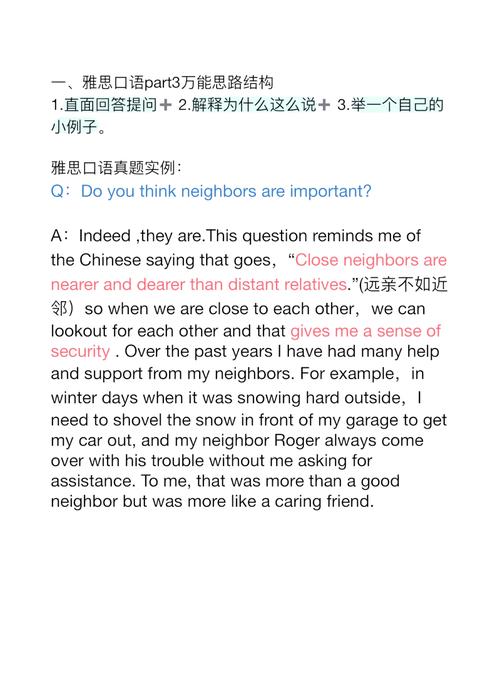
直接回应(Direct Answer)
用简洁的句子明确表达核心观点,避免模糊表述。
- 问:“Do you think technology has improved communication?”
- 答:“Absolutely, technology has revolutionized communication, though it comes with certain drawbacks.”
解释论证(Explanation & Justification)
用1-2句话阐述观点背后的原因,可结合个人观察或普遍现象。

- “Thanks to social media and video calls, people can connect across continents instantly, breaking down geographical barriers that once limited interaction.”
举例说明(Example & Evidence)
具体案例是支撑观点的关键,可引用社会事件、数据或个人经历(需真实合理)。
- “For instance, during the pandemic, platforms like Zoom and WeChat became lifelines for students and professionals to maintain work and study continuity.”
延伸拓展(Extension & Conclusion)
从个体到社会、从过去到未来,或对比不同视角,展现思维的广度。
- “However, over-reliance on digital communication might reduce face-to-face interaction skills, so a balance between online and offline communication is ideal.”
高分技巧:细节决定成败
在掌握结构的基础上,以下技巧能显著提升答案质量:
观点对比法
对于争议性话题,采用“双方观点+个人立场”的结构,体现辩证思维。

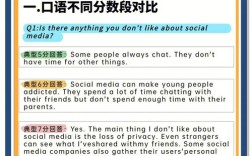
- “Some argue that artificial intelligence will create new job opportunities, while others fear it may replace human workers. In my view, AI will indeed automate certain tasks, but it will also generate roles in AI ethics and maintenance, requiring workforce adaptation.”
逻辑连接词
使用连接词串联观点,使答案更连贯,常见分类如下:
| 类型 | 示例 |
|---|---|
| 递进关系 | Moreover, Furthermore, In addition |
| 转折关系 | However, Nevertheless, On the contrary |
| 因果关系 | Therefore, As a result, Consequently |
| 举例说明 | For example, Take...as an instance, To illustrate |
抽象概念具体化
对于抽象话题(如“文化”“教育”),将其转化为具体场景或现象。
- 问:“What is the importance of preserving traditional culture?”
- 答:“Preserving traditional culture is vital because it reflects a nation’s identity. For example, festivals like the Dragon Boat Festival not only celebrate history but also strengthen family bonds through shared rituals.”
常见话题与实例解析
以下是Part 3高频话题的答案框架,供考生参考:
话题1:环境问题(Environmental Issues)
- 问题:“What can individuals do to protect the environment?”
- 答案:
- 直接回应:Individuals play a crucial role in environmental protection through daily habits.
- 解释论证:Small actions, like reducing plastic use and saving energy, collectively reduce carbon footprints.
- 举例说明:For instance, using reusable bags and public transport instead of cars can significantly lower emissions.
- 延伸拓展:Governments and businesses must also implement policies, but individual awareness drives systemic change.
话题2:教育(Education)
- 问题:“Is online education as effective as traditional classroom learning?”
- 答案:
- 直接回应:Online education offers flexibility but lacks the full effectiveness of traditional learning in some aspects.
- 解释论证:Traditional classrooms provide face-to-face interaction, which fosters immediate feedback and social skills.
- 举例说明:A student struggling with math may benefit more from a teacher’s in-person guidance than from pre-recorded videos.
- 延伸拓展:However, online education is valuable for remote areas, suggesting a hybrid model might be optimal.
FAQs
Q1: Part 3回答时是否需要“绝对正确”的答案?
A1: 不需要,Part 3考察的是逻辑和表达能力,而非事实准确性,即使观点与考官不同,只要论证合理、语言流畅,仍可得分,即使你认为“AI对就业有害”,只要能给出“AI创造新岗位”的反驳理由,同样能展示思维深度。
Q2: 如何避免在Part 3中出现卡顿或重复?
A2: 可通过“自我修正”和“填充词”自然过渡,“Let me rephrase that...”或“That’s an interesting point—what I mean is...”,提前积累话题词汇(如“globalization”“sustainability”),减少临场词汇搜索的卡顿。
雅思口语Part 3的突破依赖于“结构化思维+语言积累+实战练习”,考生需通过大量模拟题熟悉话题逻辑,用“观点-解释-举例-拓展”的框架打磨答案,最终实现从“被动答题”到“主动讨论”的跨越。