雅思写作达到7分并非遥不可及,但需要系统的方法和持续的练习,7分作文的核心在于“精准回应+逻辑清晰+语言准确”,即完全覆盖题目要求、观点连贯且用词句式多样,以下从审题、结构、论证、语言四个维度展开具体策略,辅以实例说明,帮助考生突破瓶颈。
精准审题:避免“答非所问”
雅思写作最忌讳偏离题意,7分作文首先要确保“任务回应”(Task Response)达标,具体需做到三点:
- 抓关键词:题目中的限定词(如“some people”“most countries”)和核心动词(如“discuss”“advantages and disadvantages”)必须精准处理,题目“Some people think that universities should provide knowledge and skills needed for the future, while others believe they should provide traditional knowledge. Discuss both views and give your own opinion.”,需明确“both views”的平等篇幅,且“your own opinion”需在结尾段清晰呈现。
- 隐含信息挖掘:如“More and more people are moving to cities for work. Why is this happening? Is it a positive or negative development?”,需回答“原因”(why)和“利弊评价”(positive/negative)两个问题,缺一不可。
- 立场一致性:全文观点需统一,若开头主张“科技利大于弊”,后续论证不能突然转向“科技弊端显著”,可通过让步句式(如“While there are concerns about…, the benefits outweigh the drawbacks.”)体现辩证思维。
逻辑结构:让考官“一目了然”
清晰的结构是7分作文的骨架,推荐经典“四段式”或“五段式”:
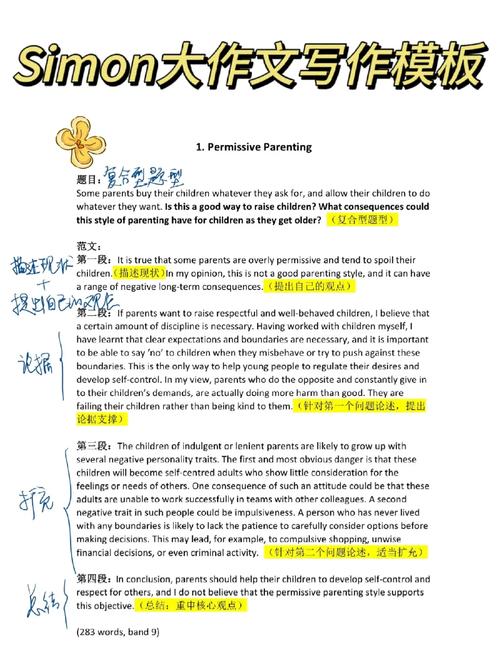
- 引言段(Introduction):改写题目背景,明确讨论范围,亮明观点(避免模板化套话,如“With the development of society…”可改为“Urbanization has accelerated globally, prompting debates about its impacts.”)。
- 主体段1(Body Paragraph 1):分论点1+解释+例证,论证“科技促进沟通”,可写:“Technology has revolutionized communication through instant messaging platforms like WeChat, which enable real-time interaction regardless of geographical distance, thus strengthening social bonds.”
- 主体段2(Body Paragraph 2):分论点2+解释+例证(可与段1形成对比或递进)。
- 结论段(Conclusion):重申观点(避免重复原句),总结核心论点,可适当提出建议或展望(如“Thus, while technological advancement brings challenges, proactive measures can maximize its benefits.”)。
结构优化技巧:
- 使用逻辑连接词(如“However”, “Consequently”, “For instance”)确保段落间过渡自然,但避免过度使用(每段1-2个即可)。
- 每段首句为主题句(Topic Sentence),概括该段核心内容,如“Another advantage of urbanization is the concentration of educational and medical resources.”。
论证深度:从“表面”到“本质”
7分作文要求论证有说服力,避免泛泛而谈,可通过以下方法提升:
- “原因+结果”链条:论证“远程办公提高效率”,可展开:“Remote work eliminates commuting time, which typically occupies 1-2 hours daily; this saved time can be redirected to work tasks, directly boosting productivity.”
- 具体例证:避免抽象表述,用数据、案例或个人经历支撑观点,如:“In Finland, where education emphasizes creativity, PISA scores in problem-solving have ranked top globally for a decade, proving the effectiveness of skill-based learning.”
- 多角度分析:对复杂话题,可拆解经济、社会、环境等维度,讨论“是否应该禁塑”,可从“环境效益(减少污染)”“经济成本(企业转型压力)”“消费者习惯(替代品接受度)”三方面论证。
语言质量:准确 > 复杂
7分作文不要求堆砌难词难句,但需体现“词汇丰富度”(Lexical Resource)和“语法多样性”(Grammatical Range)。
词汇层面:
- 替换高频词:如“important”替换为“crucial”, “vital”, “indispensable”;“good”替换为“beneficial”, “advantageous”。
- 话题词汇积累:教育类(“curriculum”, “holistic development”),环境类(“sustainable development”, “carbon footprint”)。
- 避免搭配错误:如“make a decision”(正确)而非“do a decision”。
语法层面:
- 句式多样化:穿插简单句、复合句(定语从句、状语从句)、倒装句(“Only by doing so can we…”)、强调句(“It is the government’s responsibility to…”)。
- 减少语法错误:特别注意主谓一致(“The number of students has increased”)、冠词(“a university” vs. “the university”)、时态(描述现状用一般现在时,案例用过去时)。
语言表达自查表:
| 检查项 | 7分标准示例 | 常见错误示例 |
|--------------|---------------------------------------|-----------------------------|
| 词汇准确性 | mitigate the risks | reduce the risks(重复) |
| 句式多样性 | While technology brings convenience, it may also lead to addiction. | Technology brings convenience. It may lead to addiction.(短句堆砌) |
| 语法错误 | There has been a growing trend of remote work. | There have been a growing trend…(主谓不一致) |
实战练习:从“输入”到“输出”
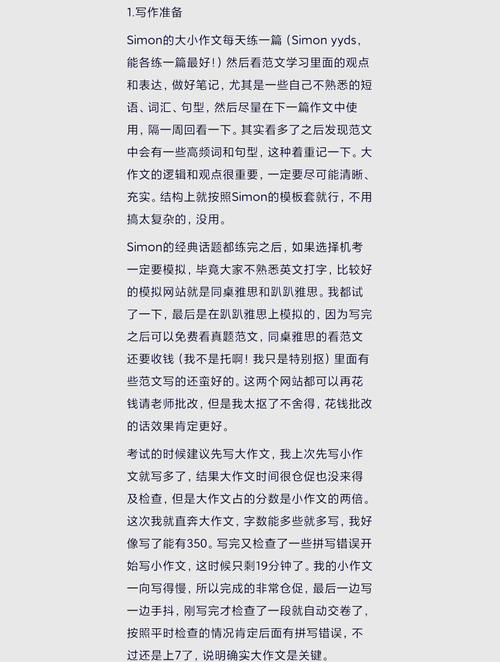
- 精范文:分析剑桥雅思真题考官范文,重点关注其结构布局、论证逻辑和词汇运用,摘录可模仿的句型(如“The crux of the issue lies in whether…”)。
- 限时写作:Task 1(20分钟)、Task 2(40分钟),模拟考试压力,避免超时。
- 反馈修改:对照评分标准(TR, CC, LR, GRA)自查,或请老师/高分考生批改,重点修改逻辑漏洞和语法错误。
FAQs
Q1:雅思写作7分需要多少词汇量?是否必须用生僻词?
A1:官方未明确词汇量要求,但7分考生需掌握约5000-6000 active words(积极词汇),能准确使用话题词汇和学术词汇(如“analyze”, “demonstrate”),生僻词并非必需,若使用不当(如搭配错误)反而扣分,关键是词汇的“准确性”和“灵活性”(如“advantage”可替换为“merit”,但需根据语境选择)。
Q2:写作时遇到没思路的题目怎么办?
A2:可通过“头脑风暴”快速构建框架:① 题目关键词拆解(如“Why do people move to cities?”→就业机会、教育资源、医疗条件);② 正反方观点罗列(利:经济发展;弊:环境污染);③ 个人立场确定(如“利大于弊,但需解决城市问题”),若某个分论点无例证,可切换为“普遍现象+合理推测”(如“Many cities offer better career prospects, as most multinational companies are headquartered in urban areas.”),避免空泛论述。
雅思写作7分是“方法+练习”的结果,考生需在审题、结构、论证、语言四个维度刻意训练,通过不断反馈修正逐步提升,最终实现从“写得出”到“写得好”的跨越。